Generate Demon Slayer style art with AI
Ufotable particle effects, Hashira haori patterns, ink-wash breathing forms, and moonlit Taisho-era forests in Koyoharu Gotouge's Kimetsu no Yaiba look.
Franchise, studio, and character references describe style or mood only, not a license, sponsorship, endorsement, or affiliation. You are responsible for your prompts and outputs. As-is, no warranty of non-infringement (not legal advice). For DMCA, copyright, or trademark issues, use our Contact page.
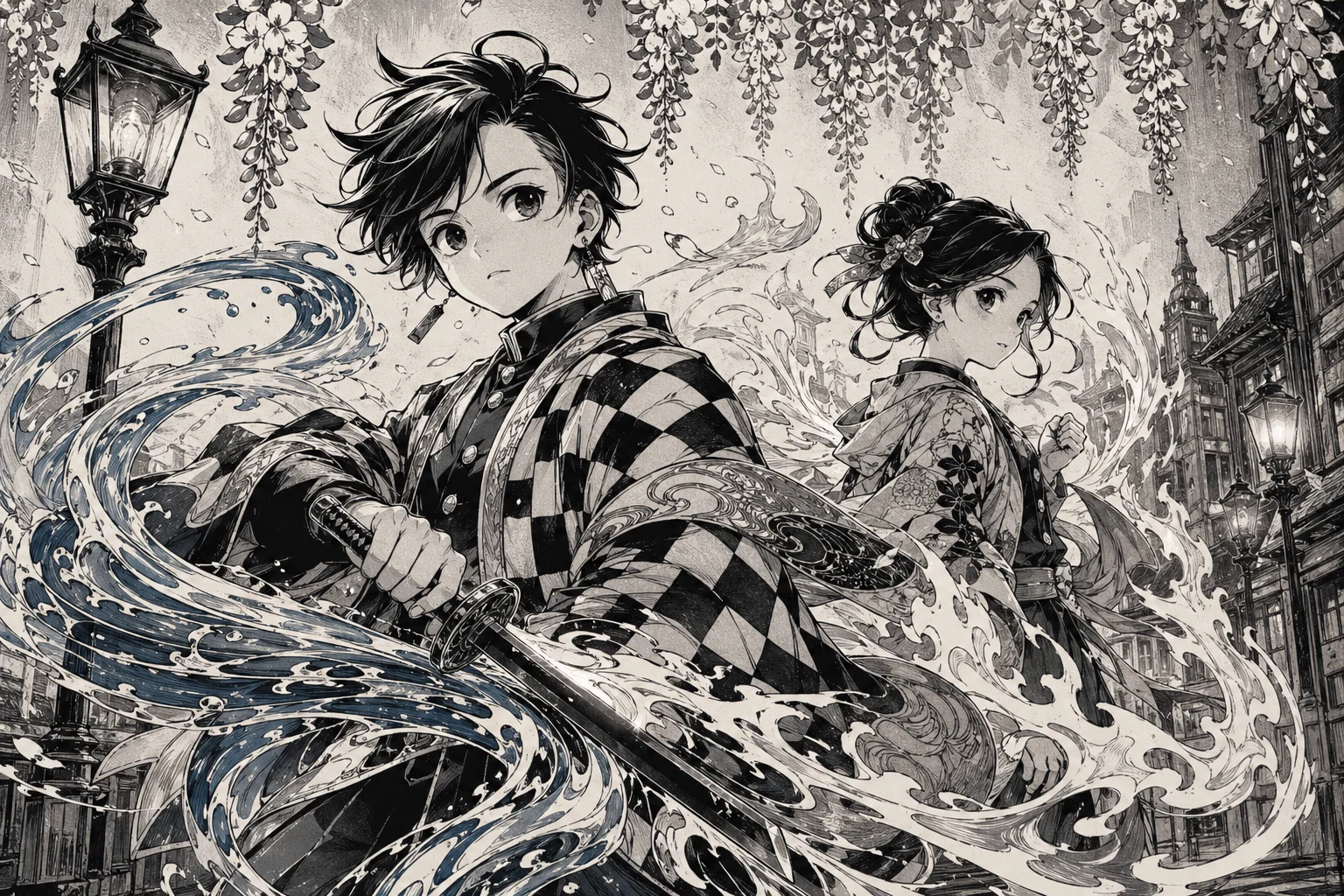
Generate a Demon Slayer scene
Type a scene below and press Generate.
About Demon Slayer style
Demon Slayer style pairs Koyoharu Gotouge's soft Taisho-era character design with ufotable particle effects, ink-wash breathing forms, and Hashira haori patterns. It suits original Demon Slayer Corps OCs, moonlit forest battles, and pattern-rich character key visuals.
The Demon Slayer style refers to the look that Koyoharu Gotouge developed across 23 volumes of Kimetsu no Yaiba and that ufotable then amplified in their anime adaptation. Character design uses soft, rounded faces with large expressive eyes, glossy hair, and Demon Slayer Corps uniforms layered with patterned haori (checkered ichimatsu, asanoha hemp leaf, uroko fish-scale, sakura, wave). Backgrounds lean Taisho-era Japan: lantern-lit streets that read like Asakusa or Yoshiwara entertainment districts, moonlit cedar forests, mountain paths covered in wisteria blossom.
Action work borrows the ink-wash breathing forms and ufotable particle effects that have become inseparable from the franchise. Water breathing reads as flowing blue waves and foam; flame breathing as orange embers and heat distortion; thunder breathing as sharp gold lightning; moon breathing as crescent arcs of red and black. Each breathing style gets a distinct particle palette and a sumi-ink calligraphic stroke shaped around the swordsman's body. Color stays restrained at the base layer, with one saturated accent in the haori or breathing effect, and shadows kept close to true black for that classic Taisho woodblock contrast.
To prompt for the Demon Slayer style on Anifusion, lead with 'demon slayer style' or 'kimetsu no yaiba ufotable style', then specify the haori pattern (ichimatsu checkered, asanoha hemp leaf, uroko scale, sakura, wave), the breathing element (water, flame, thunder, stone, mist, moon), and one Taisho location (moonlit cedar forest, wisteria mountain path, lantern-lit Taisho alley, vermillion-pillar Infinity Castle interior). Add 'ufotable particle effect', 'ink-wash breathing form', and 'sumi shadow' to land between the manga page and the anime key visual. The Demon Slayer style generator suits original Corps OCs, moonlit battle stills, and pattern-heavy decisive-pose key visuals.
Try Demon Slayer style generation
Try the look on your own prompt. Start from one of the examples below.
Example prompts
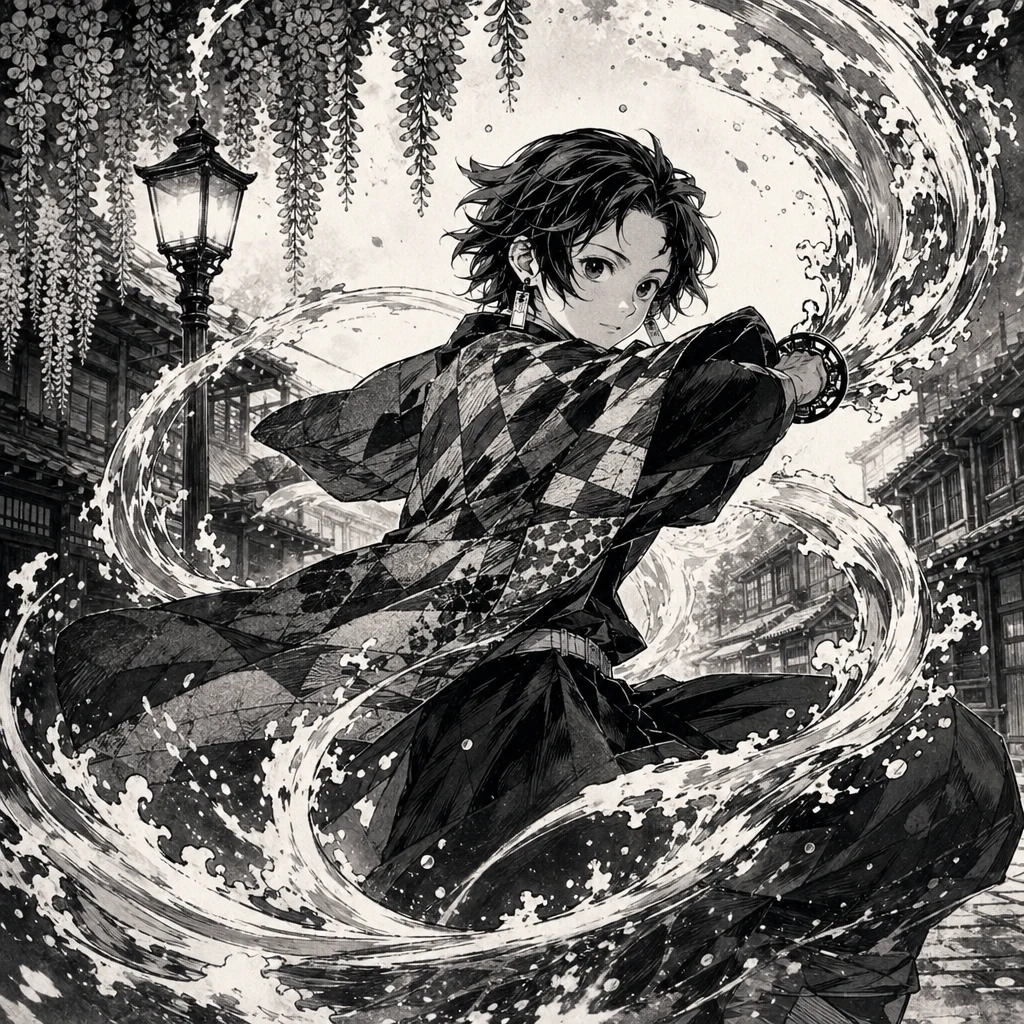
"demon slayer style, original Demon Slayer Corps swordswoman in a checkered ichimatsu haori, water breathing form wrapping her body in blue foam and ink-wash strokes, moonlit cedar forest, ufotable particle effect, soft Gotouge face"
Try this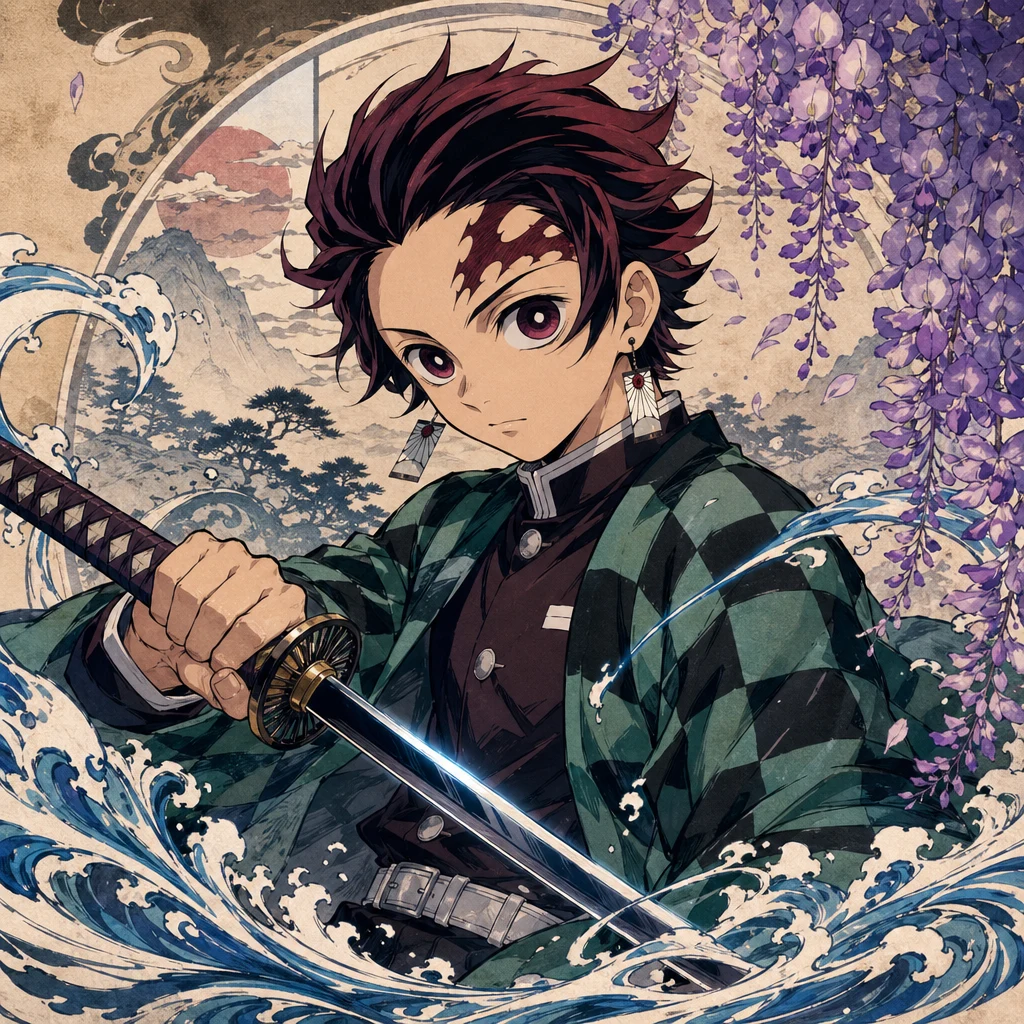
"Demon Slayer style, kimetsu no yaiba ufotable style, original flame breathing swordsman mid-strike in a wisteria mountain path, orange ember particles and heat distortion around the blade, sumi shadow, Taisho-era night, vermillion lantern in the foreground"
Try this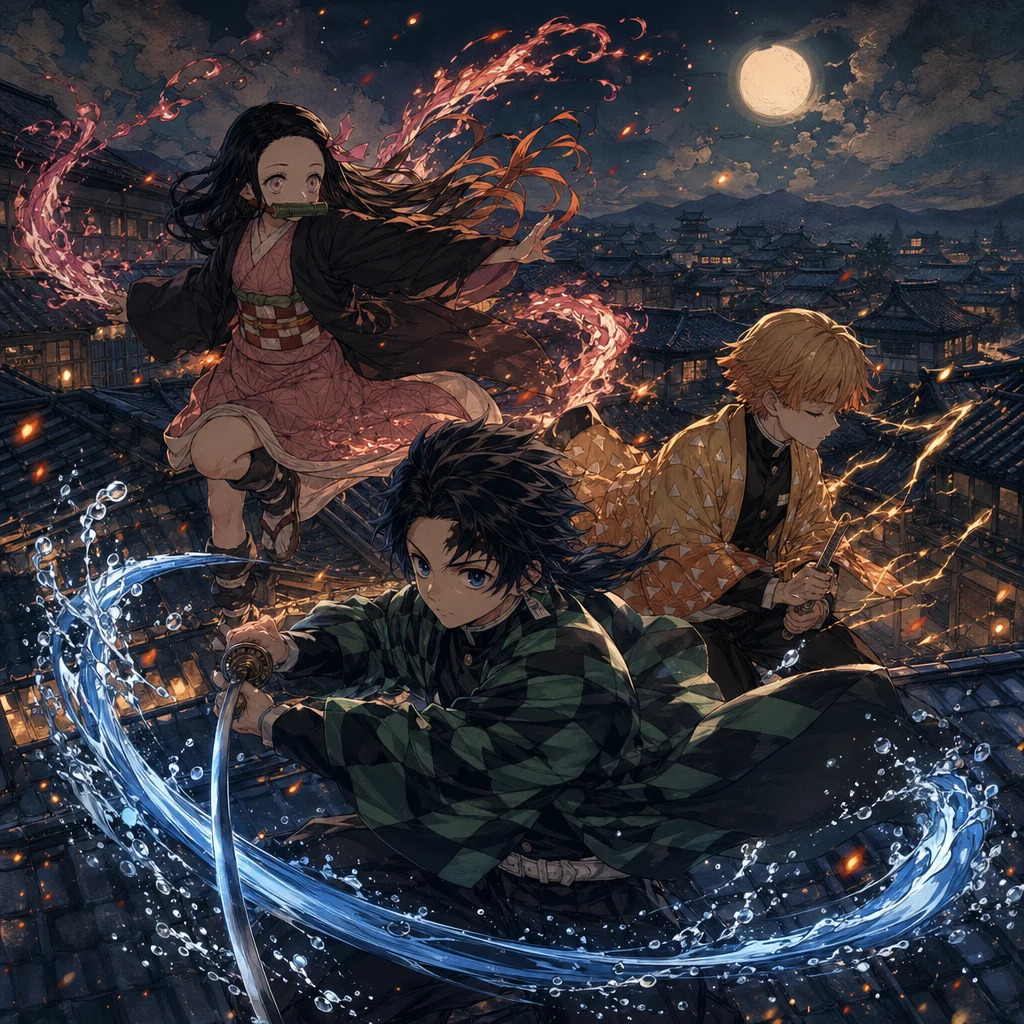
"demon slayer style portrait key visual, two original Hashira-tier swordfighters back to back in patterned haori (asanoha and uroko), thunder breathing gold lightning curling between them, vermillion-pillar Infinity Castle interior, sumi shadow"
Try thisMake your own Demon Slayer style art
Type a prompt below, or tap a starter to begin.
Generate a Demon Slayer scene
Type a scene below and press Generate.
Why choose Anifusion?
Ink-wash breathing forms
Sumi-ink calligraphic strokes wrapped around the swordsman's body for water, flame, thunder, stone, mist, and moon breathing techniques.
Ufotable particle effects
Anime-borrowed particle palettes per breathing element: blue foam for water, orange embers for flame, gold lightning for thunder, red-black crescents for moon.
Hashira haori patterns
Authentic Taisho textile motifs layered over Corps uniforms: ichimatsu checkered, asanoha hemp leaf, uroko fish scale, sakura, and wave.
Taisho-era settings
Lantern-lit Asakusa-style streets, moonlit cedar forests, wisteria mountain paths, and vermillion-pillar Infinity Castle-style interiors.
Moonlit forest mood
Cool blue night palette, mist drifting between cedar trunks, and a single warm lantern or breathing-effect highlight as the only saturated color.
Soft Gotouge character design
Rounded faces, large reflective eyes, glossy hair, and approachable proportions even on demon slayers and Hashira-tier swordfighters.
Create in 3 easy steps
Write your prompt
Describe your vision for Demon Slayer style in plain language.
Refine settings
Tune the aspect ratio and style strength to your liking.
Generate and enjoy
Click generate and watch your masterpiece come to life in seconds.
Related styles
Discover more artistic directions you might love
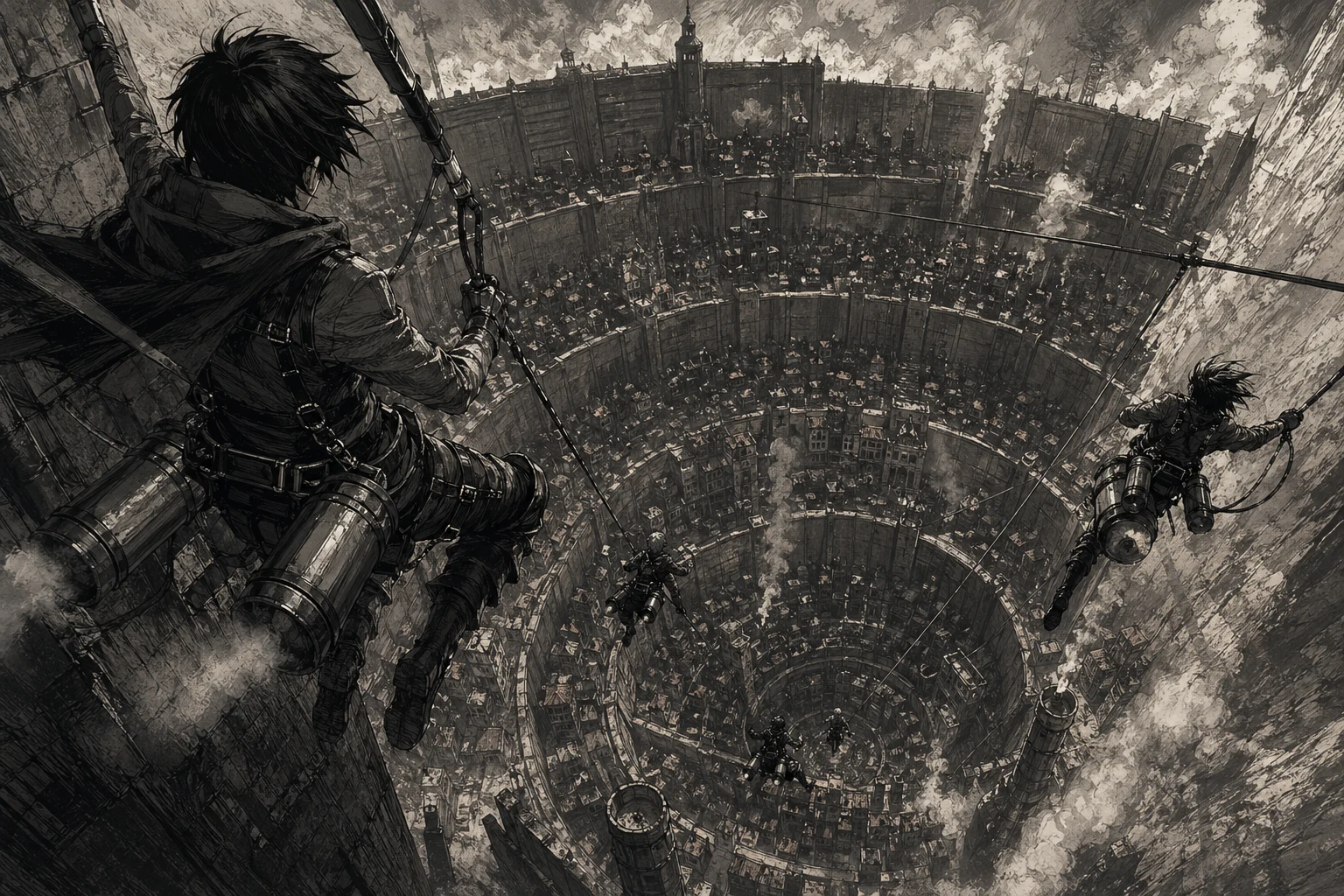
Attack on Titan style
Attack on Titan style pairs Isayama jagged ink lines and dense crosshatch with ODM gear cable trails, ruined Wall Maria perspective, and pure scale dread. It suits Survey Corps OCs, vertical-action chase panels, and walled-city establishing shots.
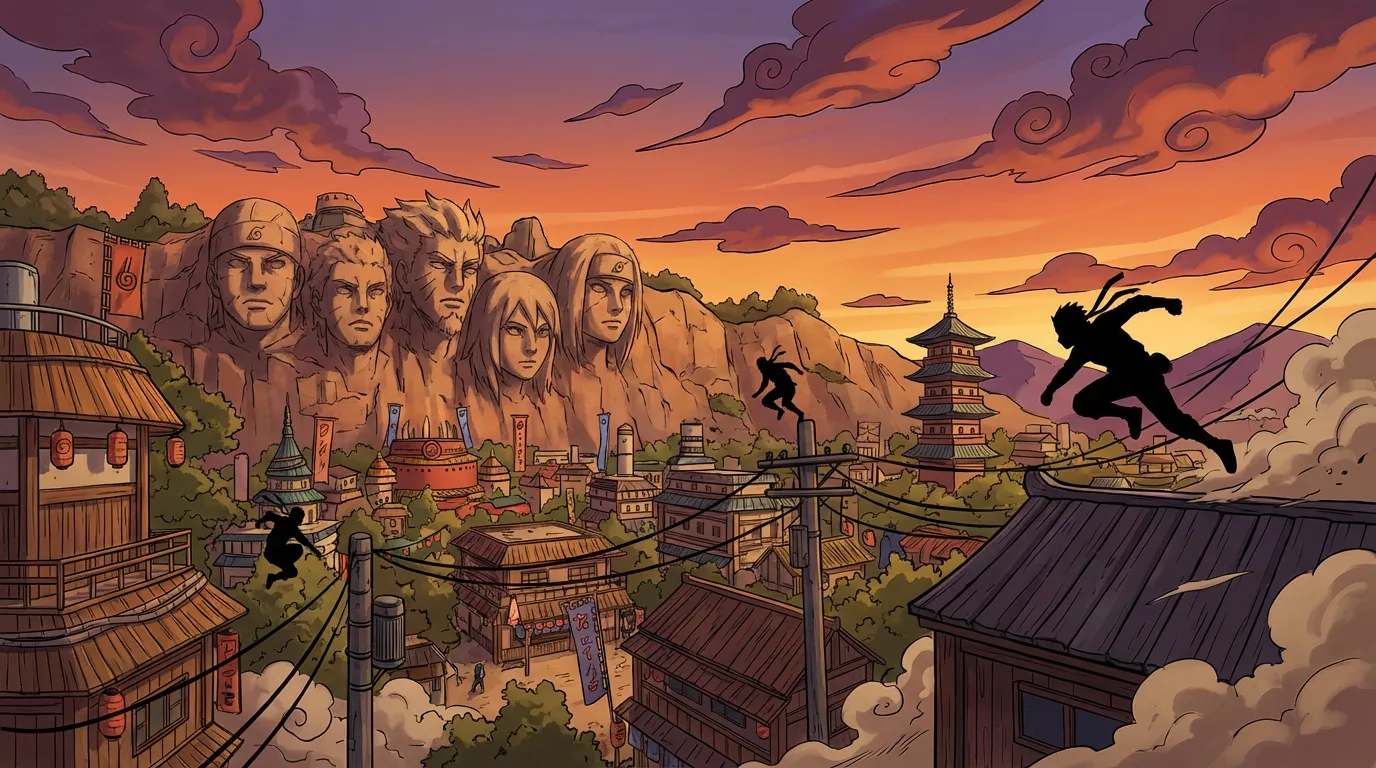
Naruto style
Naruto style pairs Masashi Kishimoto detailed ninja design with fan-pattern smoke trails, ninjutsu glow rims, and dense crosshatch ink. It suits ninja OCs, Hidden Village rooftop fights, and chakra-driven jutsu panels.
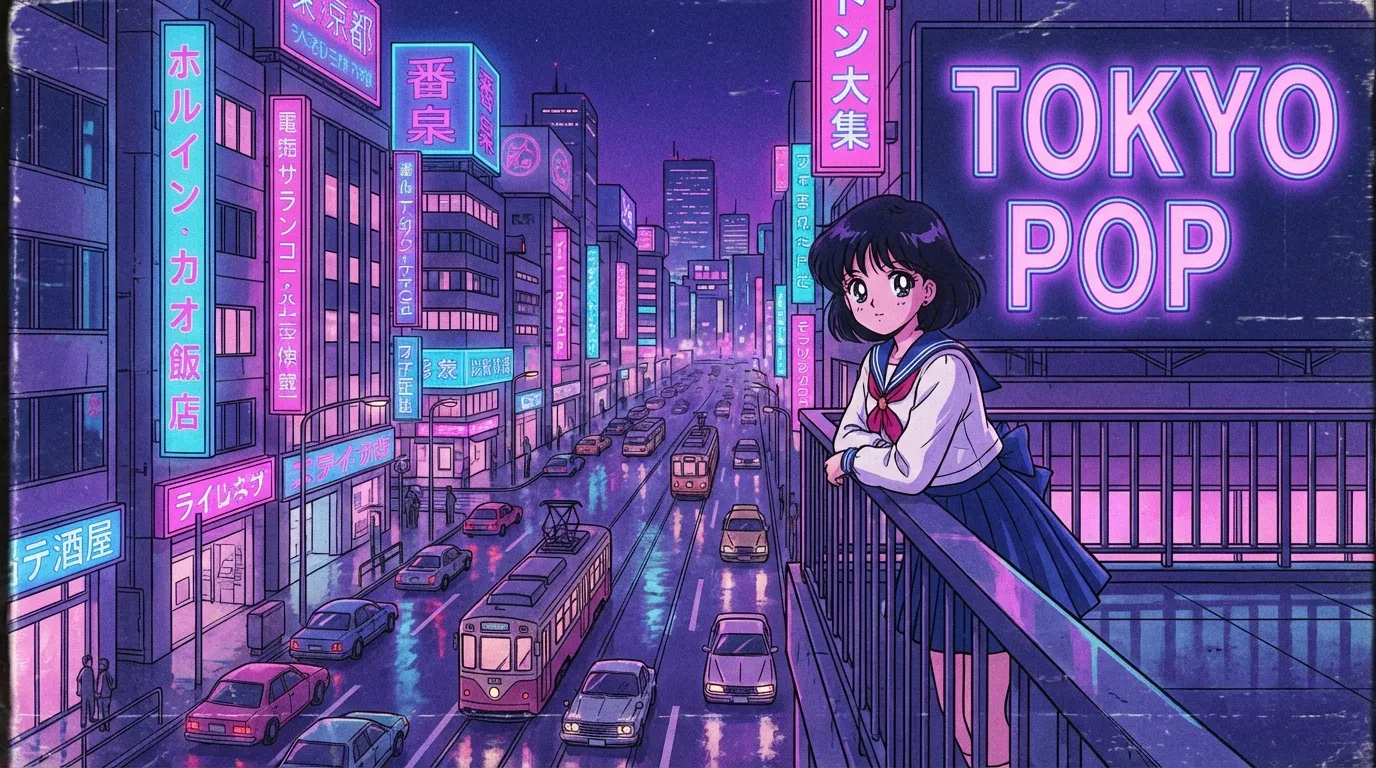
90s anime style
90s anime style pairs cel-painted limited palettes with OAV film grain, chunk highlights on hair, and Akira-era heavy line weight. It suits magical girl key visuals, mecha cockpit shots, and Bebop-style adult action stills.
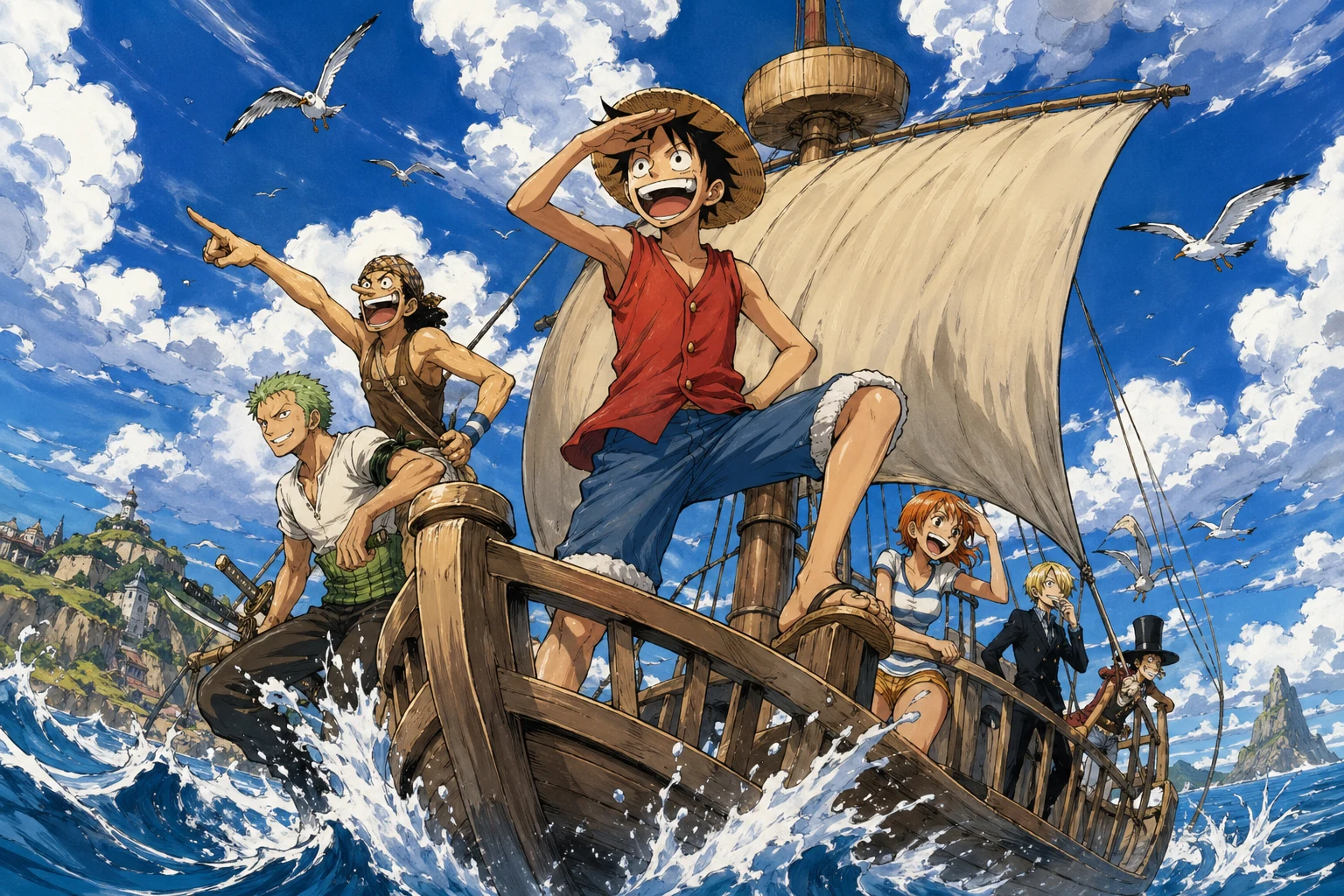
One Piece style
One Piece style combines Eiichiro Oda exaggerated limb proportions, expressive crowd faces, and tropical island color with the rubbery, motion-line-heavy action of a long-running shonen adventure. It suits pirate OCs, comedic brawl panels, and wanted-poster art.
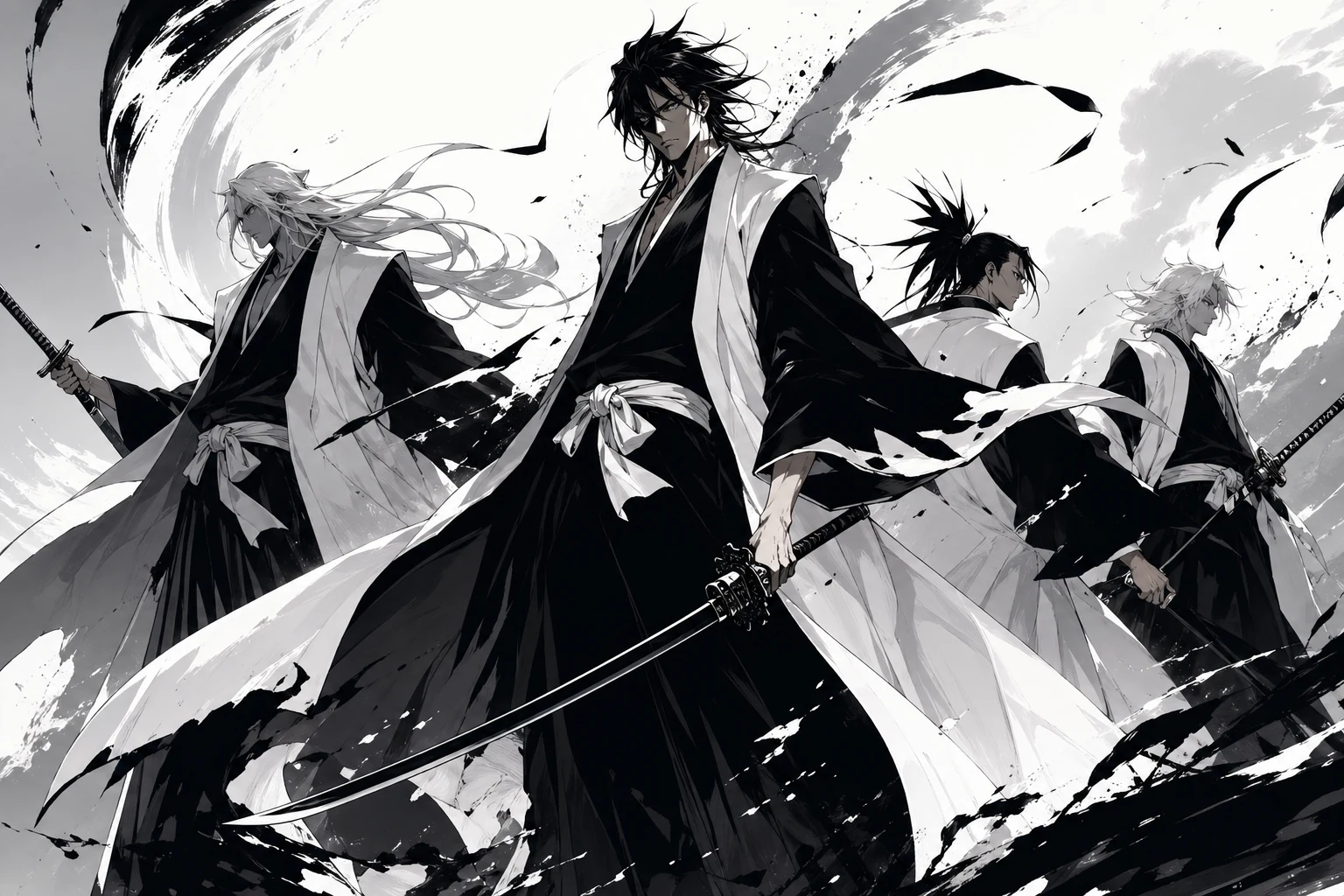
Bleach style
Bleach style is a high-fashion shonen look defined by Tite Kubo's high-contrast ink, the Hueco Mundo desaturated white-gray-black palette, Zanpakuto release glows, and 9-head runway-tall shihakusho silhouettes. It suits original captains, hollows, Quincy, and bankai release key art.
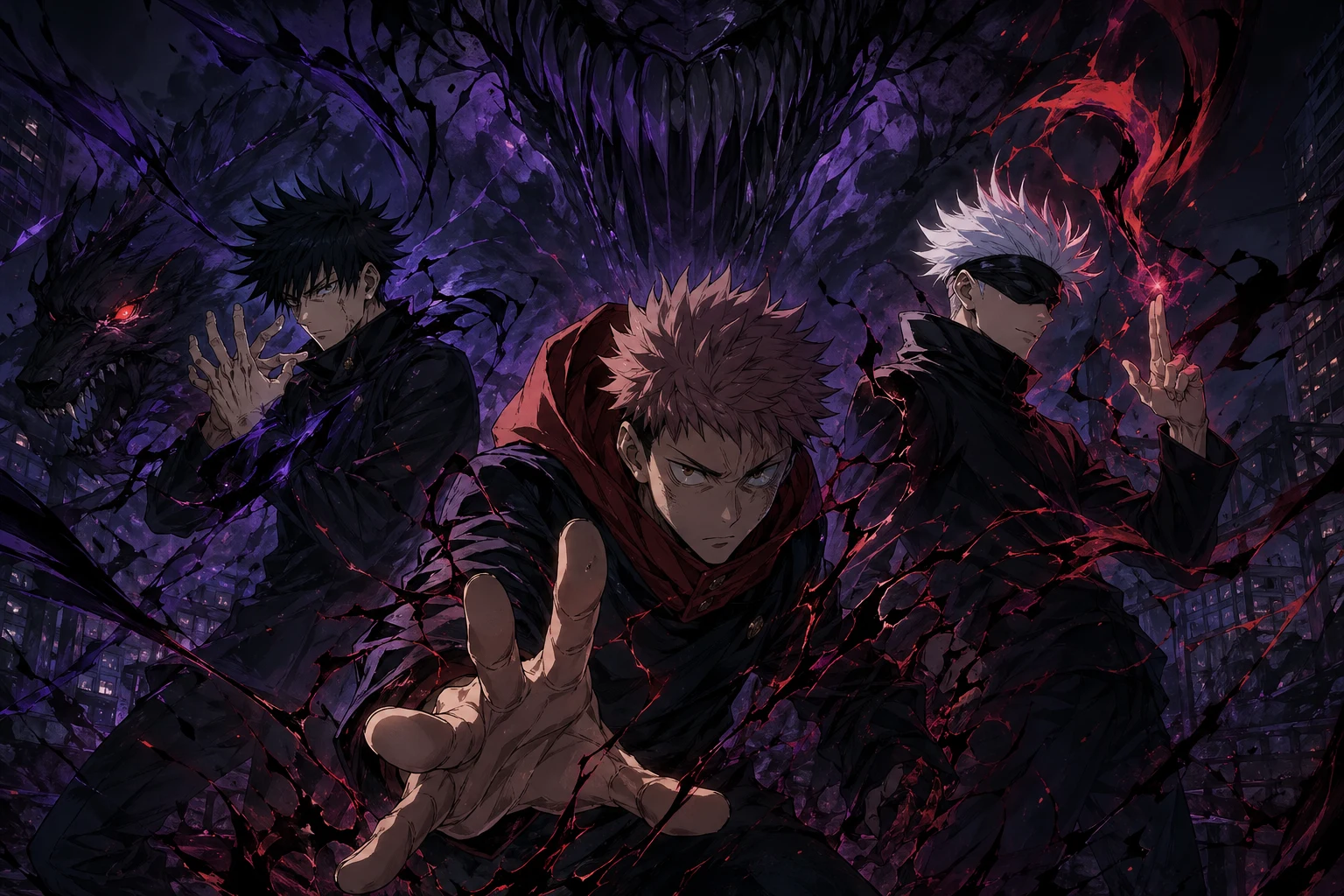
Jujutsu Kaisen style
A dark shonen look built on thick contour lines, heavy blacks, and fluid motion arcs when supernatural effects appear. It pairs modern cities with eerie, ritual space.
Frequently asked questions
Prompt tips, rights, and workflow. Sign up free to generate in this look today.
Generate a Demon Slayer scene
Type a scene below and press Generate.
What defines the Demon Slayer art style?
It is the meeting point of Koyoharu Gotouge's soft Taisho-era character design and ufotable's particle-heavy anime treatment. Soft rounded faces with large reflective eyes sit inside Corps uniforms layered with traditional haori patterns (ichimatsu, asanoha, uroko). Action panels add ink-wash breathing forms wrapped around the swordsman, plus a per-element particle palette (blue water foam, orange flame embers, gold thunder lightning).
How do I prompt for the breathing technique effects?
Pick one breathing element and describe both the calligraphic shape and the particle palette. For water, request 'flowing blue water-form ink-wash strokes wrapping the swordsman, foam particles, ufotable effect'. For thunder, ask for 'sharp gold lightning bolt traced from blade tip down the swordsman's leg, sumi shadow contrast'. Stacking elements (water and thunder at once) usually muddies the effect, so commit to one per image.
Which haori patterns can I generate?
Ichimatsu (checkered), asanoha (hemp leaf), uroko (fish scale), sakura (cherry blossom), and wave patterns are the safest and most consistent. The same patterns sit on the back of Corps uniforms and on Hashira-grade haori. Ask for the pattern by name in romaji or Japanese plus a color anchor (for example 'ichimatsu green and black checkered haori') so the model commits to the geometric rhythm instead of hallucinating a mixed motif.
Can I generate Tanjiro, Nezuko, or the Hashira directly?
Anifusion does not produce official Shueisha and ufotable characters, and naming them tends to give weak, off-model results. The cleaner approach is to assemble an original Corps swordsman or Hashira-tier OC using the same vocabulary: a haori pattern, a breathing element, a moonlit Taisho location. The Demon Slayer look transfers very cleanly to original characters because the visual rules are tight and well documented.
What backgrounds and locations match the style?
Three reliable options: moonlit cedar forests with mist between trunks, wisteria-blossom mountain paths at dusk, and lantern-lit Taisho-era city alleys (Asakusa or Yoshiwara entertainment district as visual references). For boss-fight key visuals, vermillion-pillar interiors styled like the Infinity Castle work well. Avoid modern Tokyo skylines and sci-fi sets; the Taisho period is doing half the storytelling.
Should I aim for the manga page look or the anime look?
Both are legitimate. For a Gotouge manga page, use 'kimetsu no yaiba manga page', heavier sumi shadow, lighter particle effects, and screen-tone backgrounds. For a ufotable key visual, use 'kimetsu no yaiba ufotable style', stronger per-element particle effects, painted backgrounds, and a wider tonal range. The character design vocabulary stays the same; the rendering and the effect density change.
Can I use Demon Slayer style art commercially?
Anifusion grants you full commercial rights to images you generate. The Taisho swordsman aesthetic is not protected, but specific characters, named breathing techniques, the Demon Slayer Corps uniform mark, and Muzan and Upper Moon designs owned by Shueisha and ufotable are. For client work, merchandise, and paid distribution, build around original Corps members, original haori patterns, and unnamed breathing forms.
Start creating Demon Slayer style art today
Join 130,000+ creators and bring your imagination to life with 100 free credits.