Generate My Hero Academia style art with AI
Horikoshi grit ink, quirk effect overlays, U.A.-style school uniforms with tactical detail, and city-brawl key visuals built around your own pro hero OC.
Franchise, studio, and character references describe style or mood only, not a license, sponsorship, endorsement, or affiliation. You are responsible for your prompts and outputs. As-is, no warranty of non-infringement (not legal advice). For DMCA, copyright, or trademark issues, use our Contact page.
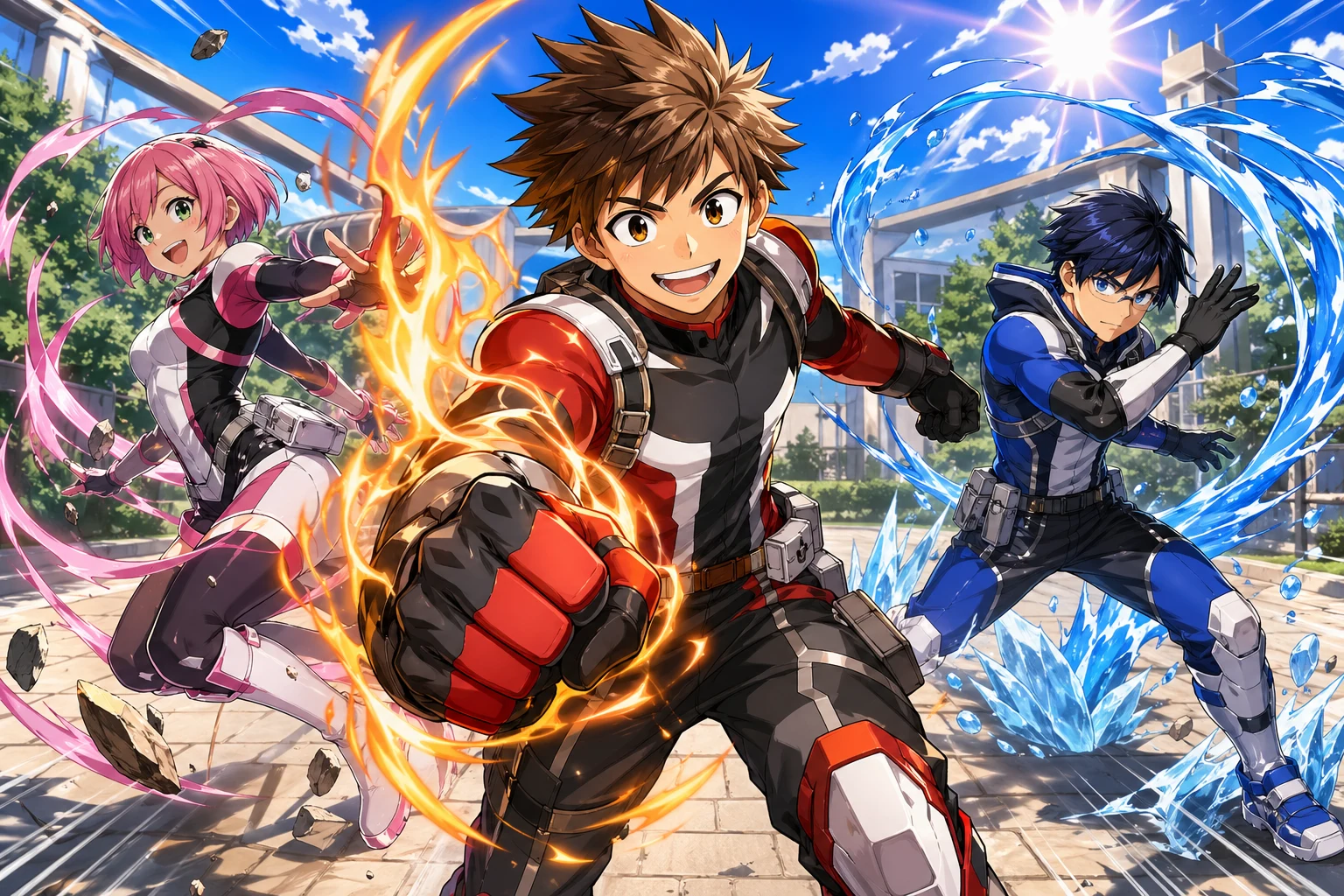
Generate a My Hero Academia scene
Type a scene below and press Generate.
About My Hero Academia style
My Hero Academia style pairs Kohei Horikoshi's grit ink and Western-comic-influenced posing with quirk effect overlays, school uniform tactical detail, and city-brawl key visuals. It suits original pro hero OCs, U.A.-style student art, and quirk reveal panels.
The My Hero Academia style refers to the look that Kohei Horikoshi developed across the Boku no Hero Academia manga and that Bones amplified in their anime adaptation. Character design borrows from Western superhero comics: pronounced jaw and brow lines, asymmetric hairstyles, exaggerated muscle silhouettes for pro heroes, and tactical hero costumes with visible buckles, cable, and quirk-specific gear (gauntlets, leg armor, harnesses, support items). Faces use sharp angular eyes with hard pupil dots and a thicker outer lash, which keeps the cast readable even in busy city-brawl panels.
Quirk effects sit on the page as overlays rather than full background takeovers: a green-arc Decay-style spread, a crackling lightning ring, a flame jet shaped like a directional cone, an explosion bloom with hard radial lines. Each effect is grounded by a heavier ink line at the source (palms, elbows, soles) and dissipates into stippled grit at the edges. Backgrounds run between two modes: the U.A. campus with its blocky stadium and Plus Ultra signage, and dense city-brawl ruin scenes with collapsed concrete, exposed rebar, and bystander silhouettes. Color stays bold and primary on the costumes, with a duller urban palette in the environments.
To prompt for the My Hero Academia style on Anifusion, lead with 'my hero academia style' or 'horikoshi shonen superhero manga style'. Define an original pro hero around three sliders: silhouette word (slim speedster, heavy bruiser, stretchy support), costume color trio (avoid the hero color combos used by canonical characters), and quirk type (movement, projection, transformation, support). Add 'quirk effect overlay', 'tactical hero costume detail', and 'city-brawl debris' for the action mode, or 'U.A.-style school uniform with red tie' for school mode. The MHA style generator works for original pro hero OCs, quirk reveal panels, U.A. student class shots, and city-brawl key visuals.
Try My Hero Academia style generation
Try the look on your own prompt. Start from one of the examples below.
Example prompts
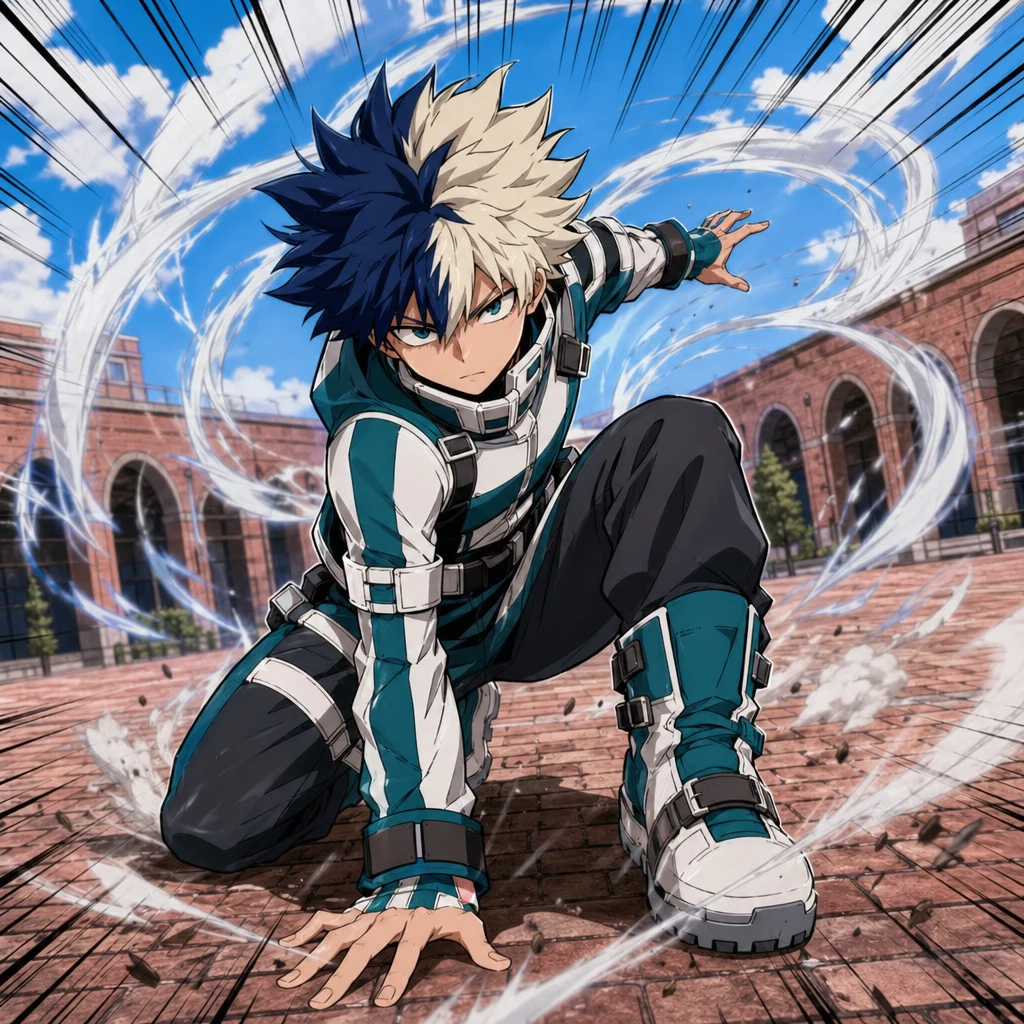
"my hero academia style, original speedster pro hero in tactical bodysuit with visible cable harness and goggles, three-quarter landing pose on rain-slick city street, lightning-ring quirk effect overlay around the calves, city-brawl debris in the background, horikoshi grit ink"
Try this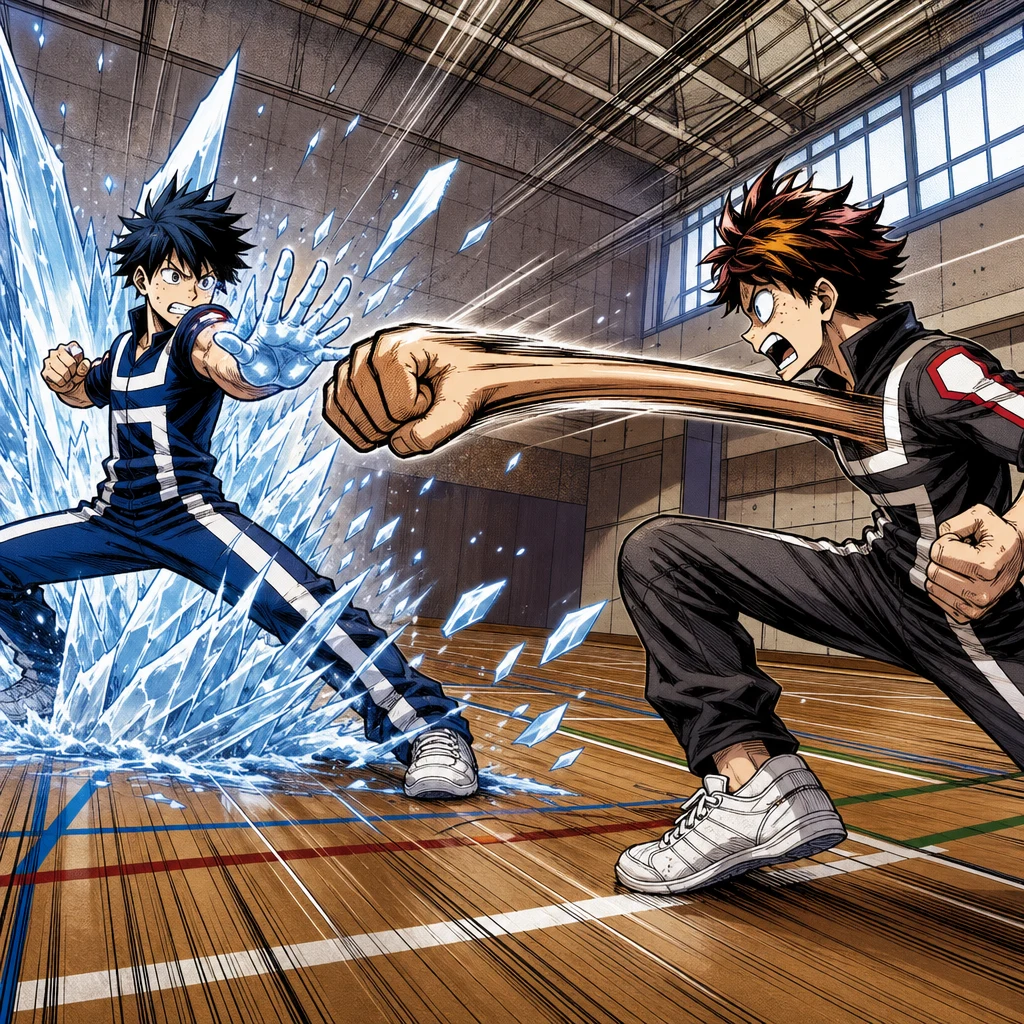
"My Hero Academia style, horikoshi shonen superhero manga style, two original U.A.-style students in charcoal blazer school uniform with red tie sparring in a training gym, ice-vs-stretch quirk effect overlay, sharp angular eye treatment, panel-level speed lines"
Try this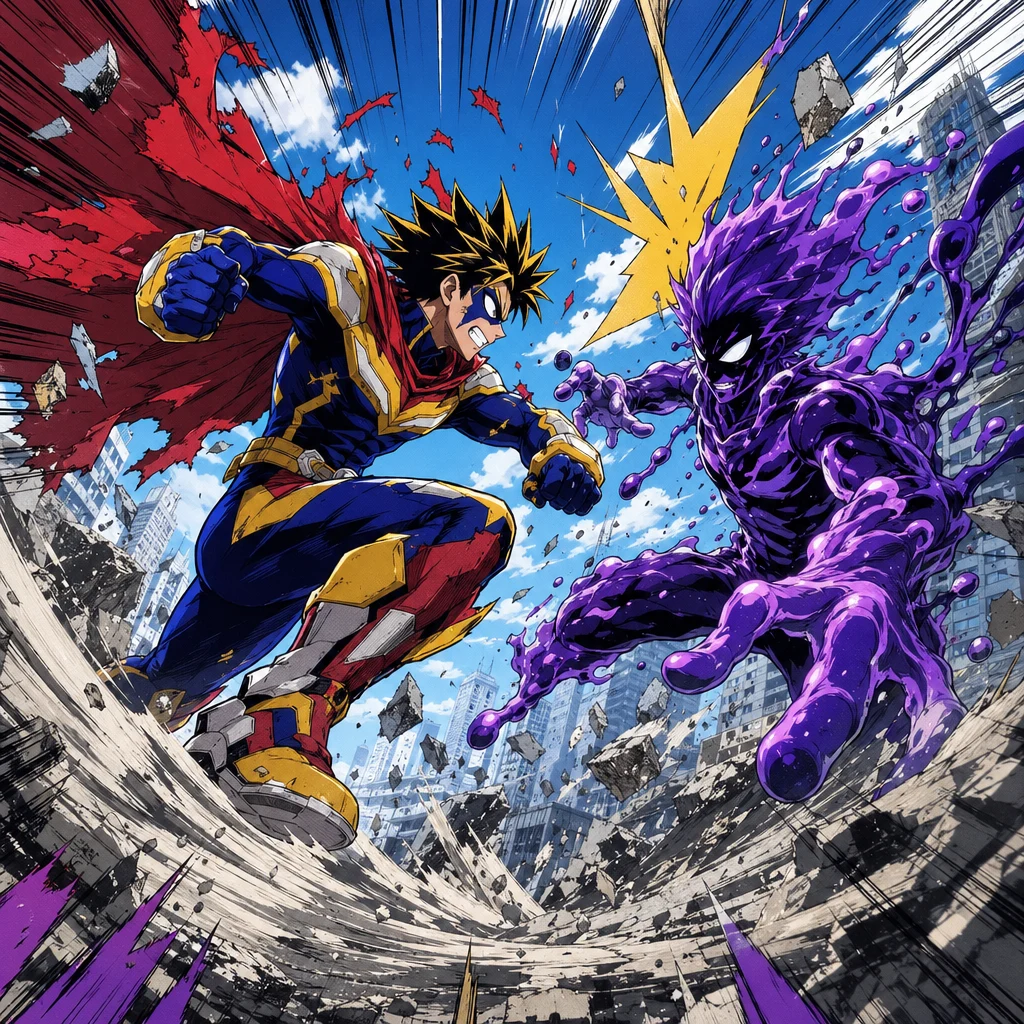
"my hero academia style key visual, original heavy bruiser pro hero squaring off against a goo-quirk villain across a collapsed plaza, explosion bloom with hard radial lines on the right, exposed rebar and civilian silhouettes behind, tactical hero costume detail"
Try thisMake your own My Hero Academia style art
Type a prompt below, or tap a starter to begin.
Generate a My Hero Academia scene
Type a scene below and press Generate.
Why choose Anifusion?
Horikoshi grit ink
Heavier ink at action sources, stippled grit at the edges, and a sharp angular eye treatment that keeps the cast readable inside busy panels.
Quirk effect overlays
Effects sit on top of the panel rather than swallowing it: lightning rings, directional flame cones, explosion blooms, decay-style green arcs.
Tactical hero costumes
Visible buckles, cable, and quirk-specific support items (gauntlets, leg armor, harnesses) instead of slick fashion-only suits.
U.A.-style school uniform
Charcoal blazer with light shirt, red tie, mid-length skirt or trousers, and a school-crest blank space ready for your own faction insignia.
City-brawl debris
Collapsed concrete, exposed rebar, civilian silhouettes in the background, and a duller urban palette to push the costume colors forward.
Heroic Western-style posing
Three-quarter landing pose, shoulder-leading punch, low-angle camera, and chest-out hero stance pulled from Western comic vocabulary.
Create in 3 easy steps
Write your prompt
Describe your vision for My Hero Academia style in plain language.
Refine settings
Tune the aspect ratio and style strength to your liking.
Generate and enjoy
Click generate and watch your masterpiece come to life in seconds.
Related styles
Discover more artistic directions you might love
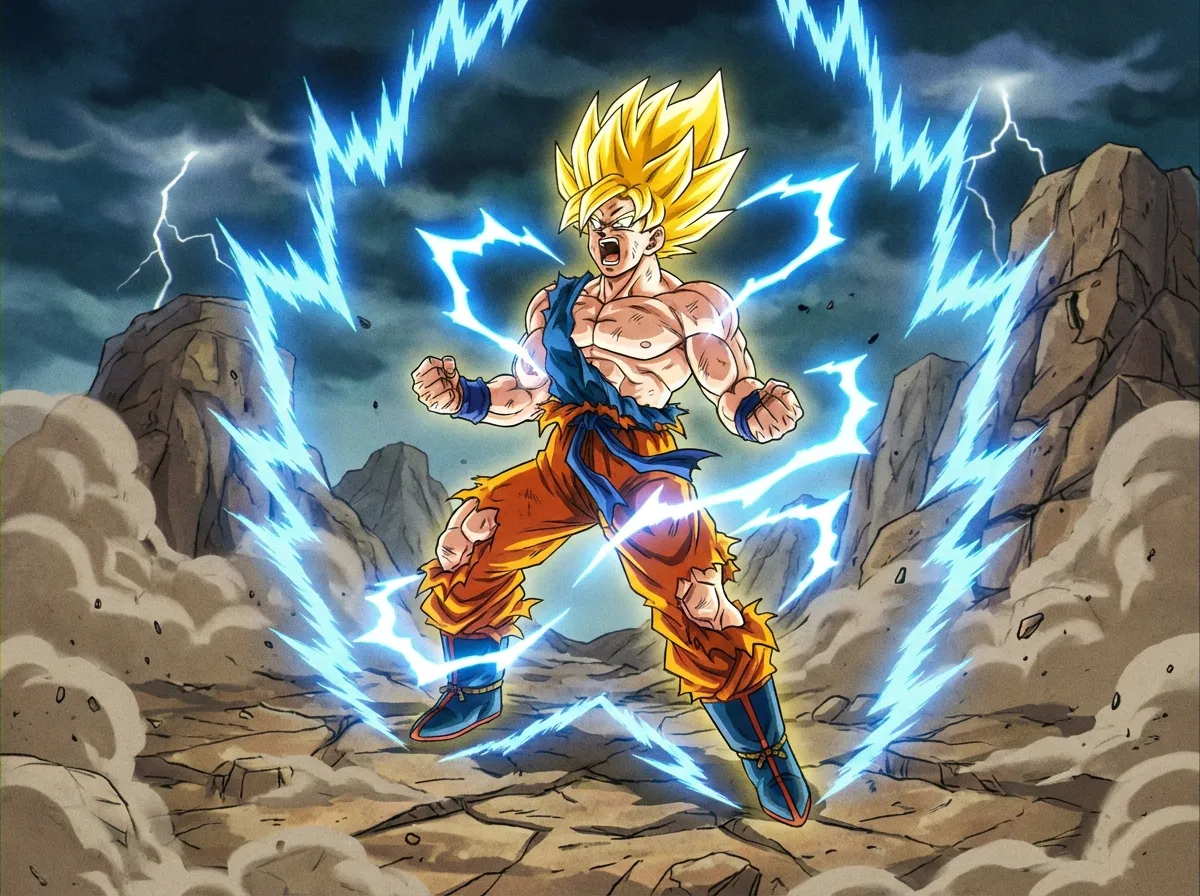
Dragon Ball style
Dragon Ball style pairs Akira Toriyama's clean spike line and rounded martial-arts proportions with Super Saiyan aura backdrops, ki blast charge frames, and Capsule Corp 80s tech design. It suits original Saiyan OCs, charge-pose key visuals, and Toriyama-style sci-fi gear.
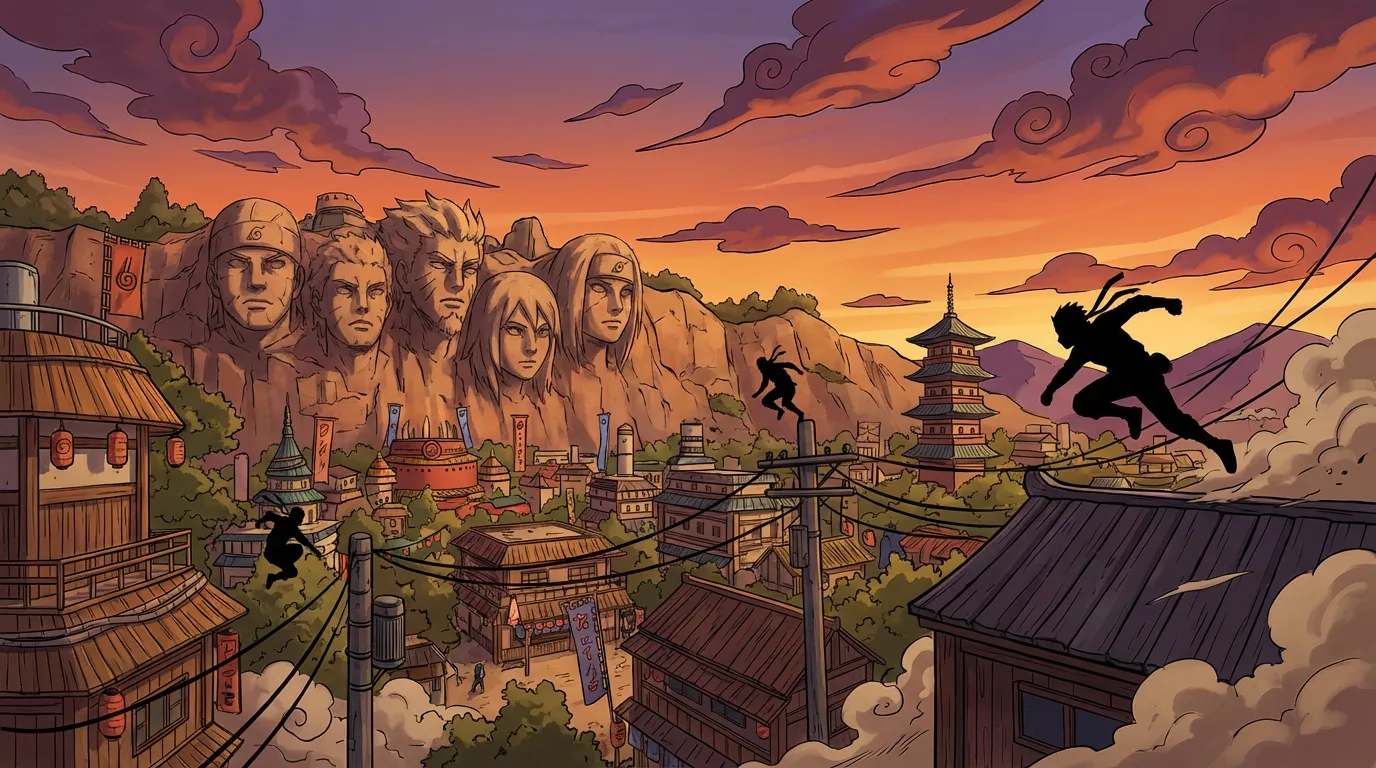
Naruto style
Naruto style pairs Masashi Kishimoto detailed ninja design with fan-pattern smoke trails, ninjutsu glow rims, and dense crosshatch ink. It suits ninja OCs, Hidden Village rooftop fights, and chakra-driven jutsu panels.
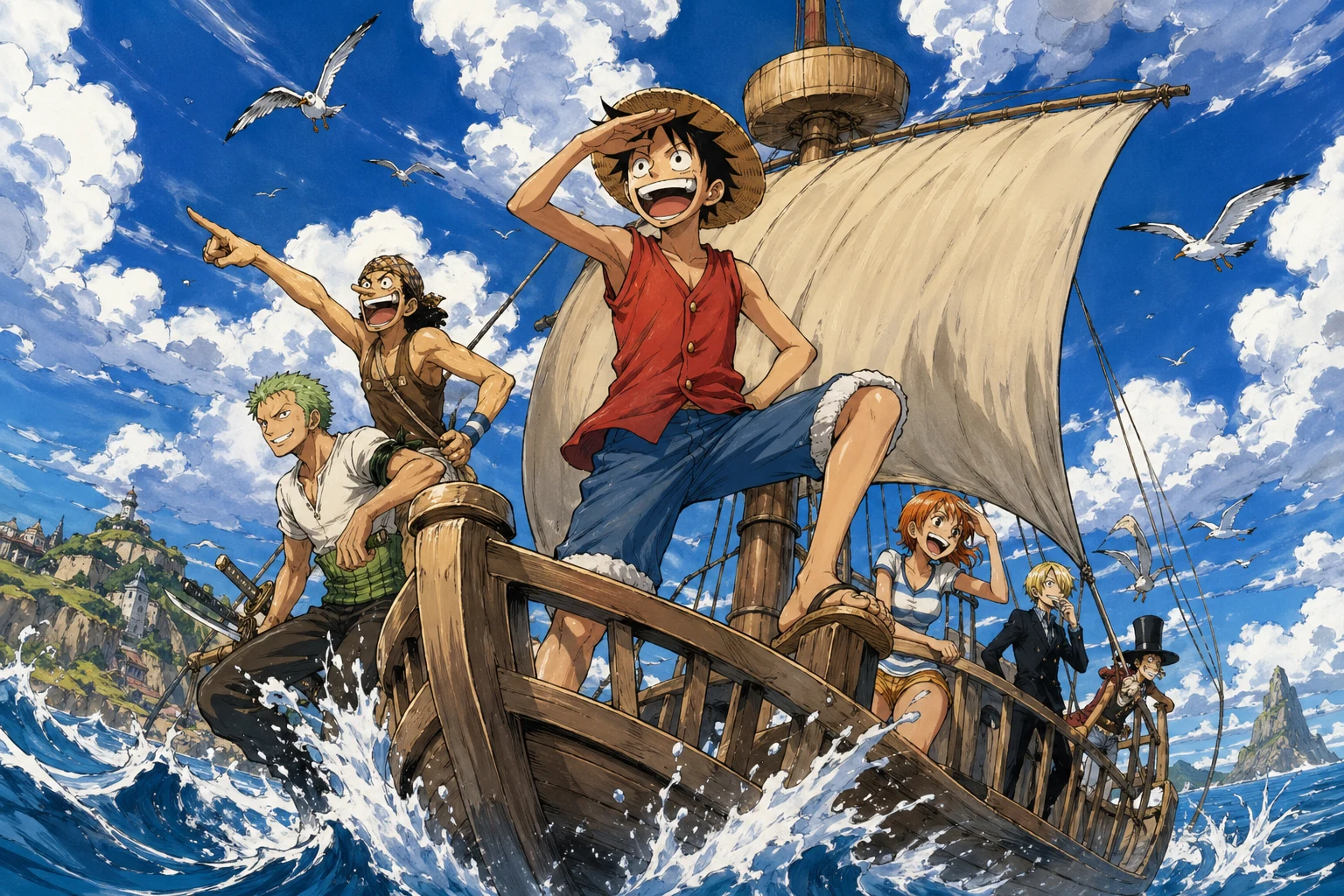
One Piece style
One Piece style combines Eiichiro Oda exaggerated limb proportions, expressive crowd faces, and tropical island color with the rubbery, motion-line-heavy action of a long-running shonen adventure. It suits pirate OCs, comedic brawl panels, and wanted-poster art.
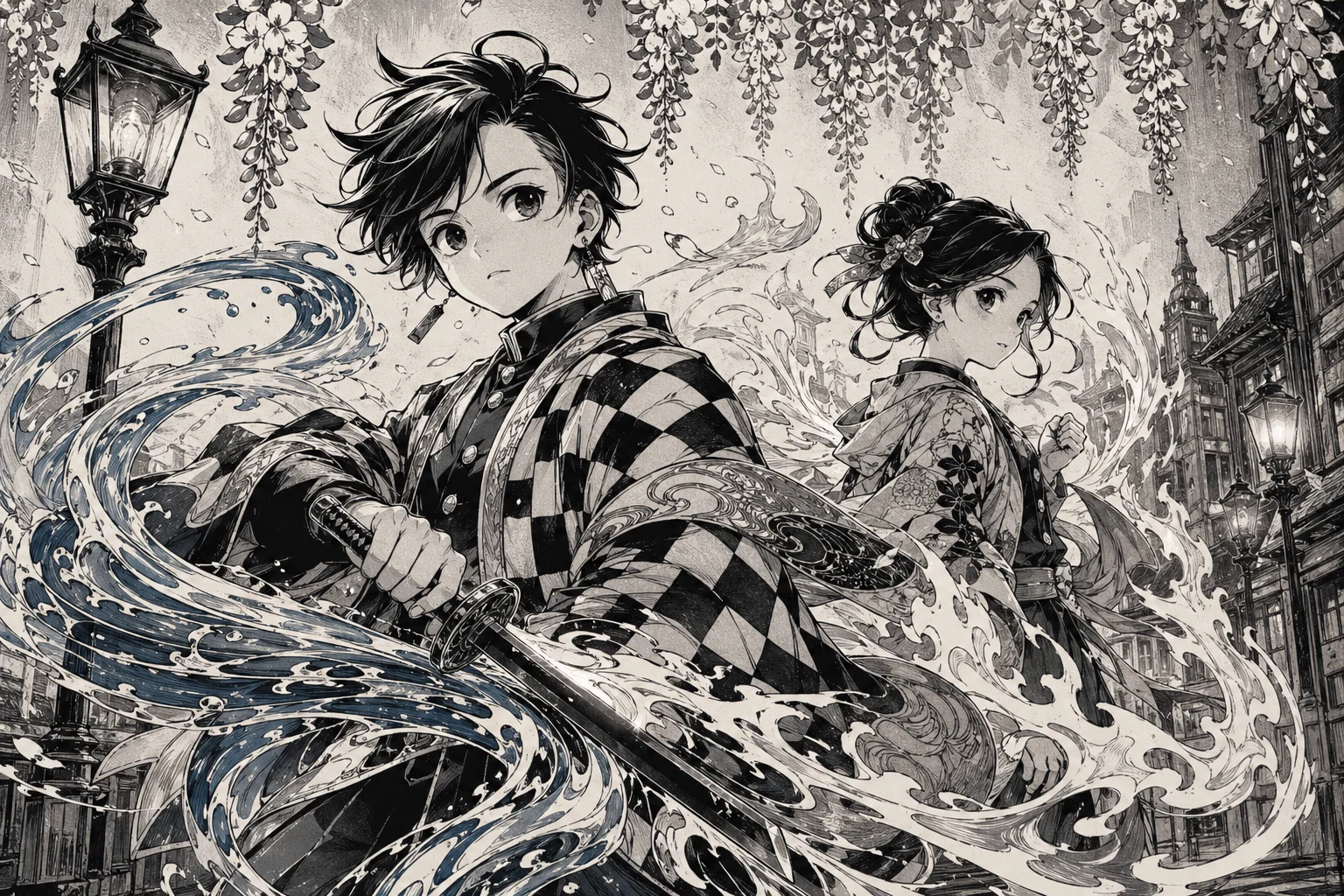
Demon Slayer style
Demon Slayer style pairs Koyoharu Gotouge's soft Taisho-era character design with ufotable particle effects, ink-wash breathing forms, and Hashira haori patterns. It suits original Demon Slayer Corps OCs, moonlit forest battles, and pattern-rich character key visuals.
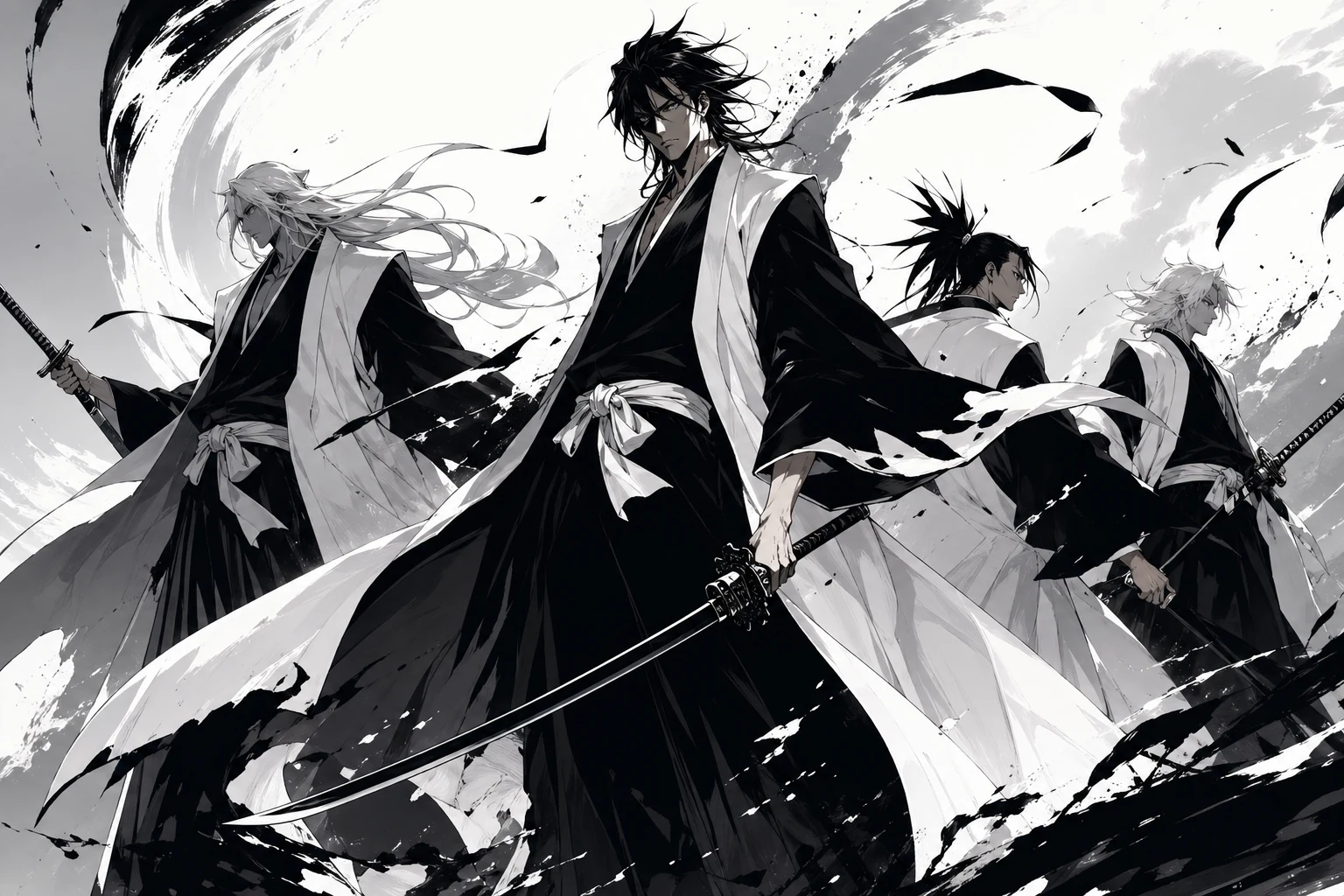
Bleach style
Bleach style is a high-fashion shonen look defined by Tite Kubo's high-contrast ink, the Hueco Mundo desaturated white-gray-black palette, Zanpakuto release glows, and 9-head runway-tall shihakusho silhouettes. It suits original captains, hollows, Quincy, and bankai release key art.
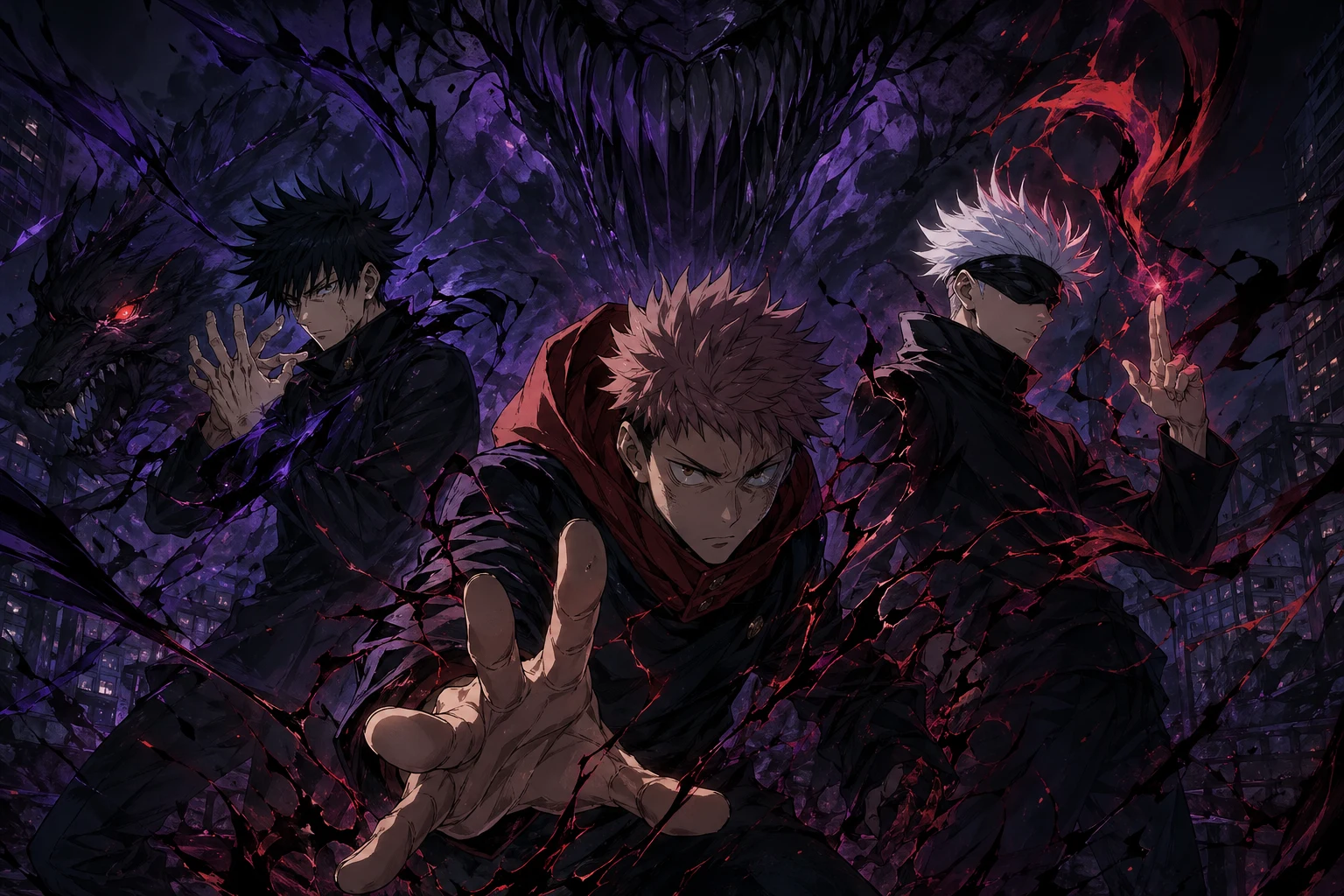
Jujutsu Kaisen style
A dark shonen look built on thick contour lines, heavy blacks, and fluid motion arcs when supernatural effects appear. It pairs modern cities with eerie, ritual space.
Frequently asked questions
Prompt tips, rights, and workflow. Sign up free to generate in this look today.
Generate a My Hero Academia scene
Type a scene below and press Generate.
What defines the My Hero Academia art style?
It is a Japan-meets-Western-comic hybrid. Horikoshi pulls posing, jaw lines, and tactical costuming from American superhero comics, then renders the page with manga conventions: sharp angular eyes, grit ink, panel-level speed lines, and quirk effects sitting as overlays rather than full splash takeovers. The result reads as Marvel-shaped storytelling drawn through a Weekly Shonen Jump pen.
How do I design an original pro hero costume?
Use a four-slider approach: silhouette word (slim speedster, heavy bruiser, stretchy support), costume color trio (pick three colors that do not overlap with canonical characters), one piece of quirk-specific gear (gauntlets, leg armor, harness, support belt), and a non-cape flair element (sash, scarf, hood, capelet). Avoid full capes and chest emblems shaped like canonical hero logos to keep your character original and trademark-safe.
How do I draw quirk effects without overloading the panel?
Treat the effect as an overlay anchored to the body part producing it. Heavier ink at the source (palms, elbows, soles), then dissipate into stippled grit at the edges. Pick a single shape language per effect: rings for lightning, cones for flame jets, blooms for explosions, arcs for spreading powers. Stacking two effects in the same panel almost always muddies the read; reserve double-quirk panels for late-arc reveal moments.
Can I generate U.A.-style school uniforms and student scenes?
Yes. Use 'U.A.-style school uniform with red tie': charcoal blazer, light shirt, mid-length skirt or trousers, and a blank crest space where you can drop your own faction insignia later. Build student scenes around recognizable settings (training gym with floor tape, classroom with chalkboard, dorm common room) and pair them with casual sportswear or PE uniforms when you want practice rather than combat.
How is MHA's posing different from older shonen?
Older shonen (Dragon Ball, early Naruto) lean on profile fight stances and centered hero shots. MHA borrows from Western superhero comics: three-quarter landing poses, shoulder-leading punches, low-angle hero stances, and panel-level wide shots that show debris and bystanders. That Western framing is one of the biggest reasons the style reads as 'modern shonen' rather than throwback action.
Which Anifusion model is best for MHA-style art?
SDXL anime models tend to do well with the bold costume palette and tactical detail, while Flux Dev gives you cleaner ink texture and better page composition. Start with Flux Dev for hero portraits and key visuals, switch to SDXL anime for ensemble city-brawl shots where you want saturated costume colors to pop. Either way, keep CFG moderate so the quirk effect overlay does not blow out into a full bloom.
Can I use My Hero Academia style art commercially?
Anifusion grants you full commercial rights to images you generate. The shonen-superhero hybrid aesthetic is not protected, but specific characters, costume designs, the U.A. logo, the Plus Ultra slogan, and licensed quirk names owned by Shueisha and Bones are. For client work, merchandise, and paid distribution, build around original pro heroes with original costume color combinations and unnamed quirks.
Start creating My Hero Academia style art today
Join 130,000+ creators and bring your imagination to life with 100 free credits.