Generate sci-fi anime art, from cockpit HUDs to neon skylines
Panel-line mecha detail, anamorphic lens flares, cyberpunk neon gradients, and orbital station glass. Build covers, key visuals, and dystopian page art.
Franchise, studio, and character references describe style or mood only, not a license, sponsorship, endorsement, or affiliation. You are responsible for your prompts and outputs. As-is, no warranty of non-infringement (not legal advice). For DMCA, copyright, or trademark issues, use our Contact page.
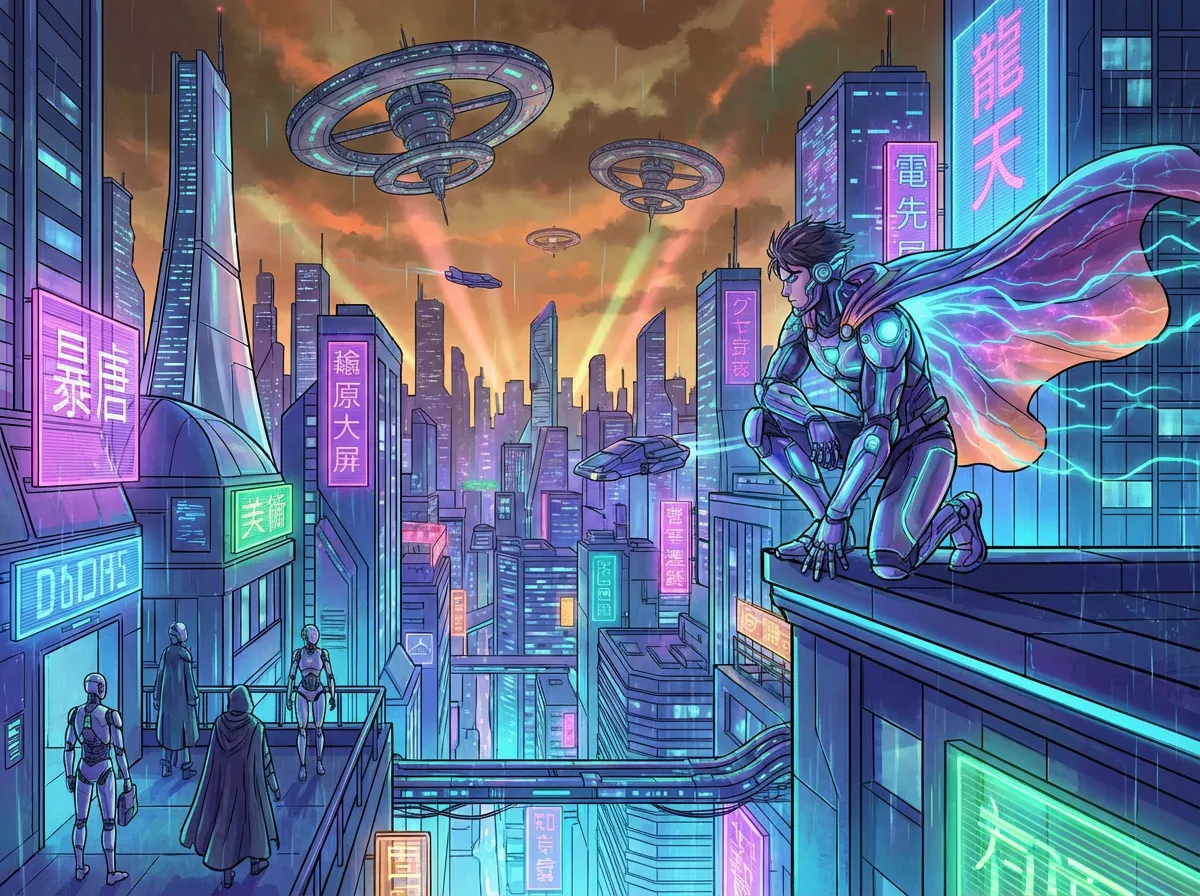
Generate a Sci-fi anime scene
Type a scene below and press Generate.
About Sci-fi anime style
Sci-fi anime style covers near-future and far-future worlds: panel-line mecha detail, anamorphic lens flares across rain-slick streets, neon HUD overlays on cockpit glass, and metallic rim light along android joints. Use it for cyberpunk page art, mecha cover keys, dystopian short-film mood boards, and hard-SF book covers.
Sci-fi anime style draws on a tradition that runs from Ghost in the Shell and Akira through Neon Genesis Evangelion, Cyberpunk: Edgerunners, and Steins;Gate. The visual signature is engineering: mecha rendered with visible panel lines, vent louvres, and bolt heads instead of smooth vehicle gloss; cockpits with HUD overlays glowing on the inside of the canopy; android joints with exposed actuator wear; and city air thick enough that anamorphic lens flares smear across streetlamps. Color sits in the cyberpunk neon gradient family (electric blue into hot magenta) when the scene is street-level, and shifts to cool slate, magnesium white, and engine orange for orbital and hard-SF settings.
The style is built for cyberpunk webcomic creators, indie mecha designers blocking out new frame silhouettes, dystopian short-film directors building mood boards, and hard-SF authors generating book-cover keys. Because the look survives the jump from page panel to printed cover, the same character sheet of an android pilot can be reused as a chapter splash, a marketing illustration, and a cover thumbnail without losing legibility. Backgrounds are first-class: rain-slick alleys with holographic ad stacks, bridge interiors with banks of CRT-style readouts, and orbital docks with cracked plating around airlock seals.
To get the look, prompt with engineering nouns and lighting cues. A line like female mecha pilot in chest harness, cockpit HUD overlay across visor glass, panel-line frame visible through canopy, anamorphic lens flare across nose camera gives the model real surfaces to commit to. Compared with generic futurism, this style stays grounded in believable hardware: surfaces show wear, screens show interface chrome, and lighting reads as sodium street, neon sign, or muzzle flash rather than ambient glow. That hardware bias is what separates a memorable cyberpunk key from a placeholder render.
Try Sci-fi anime style generation
Try the look on your own prompt. Start from one of the examples below.
Example prompts
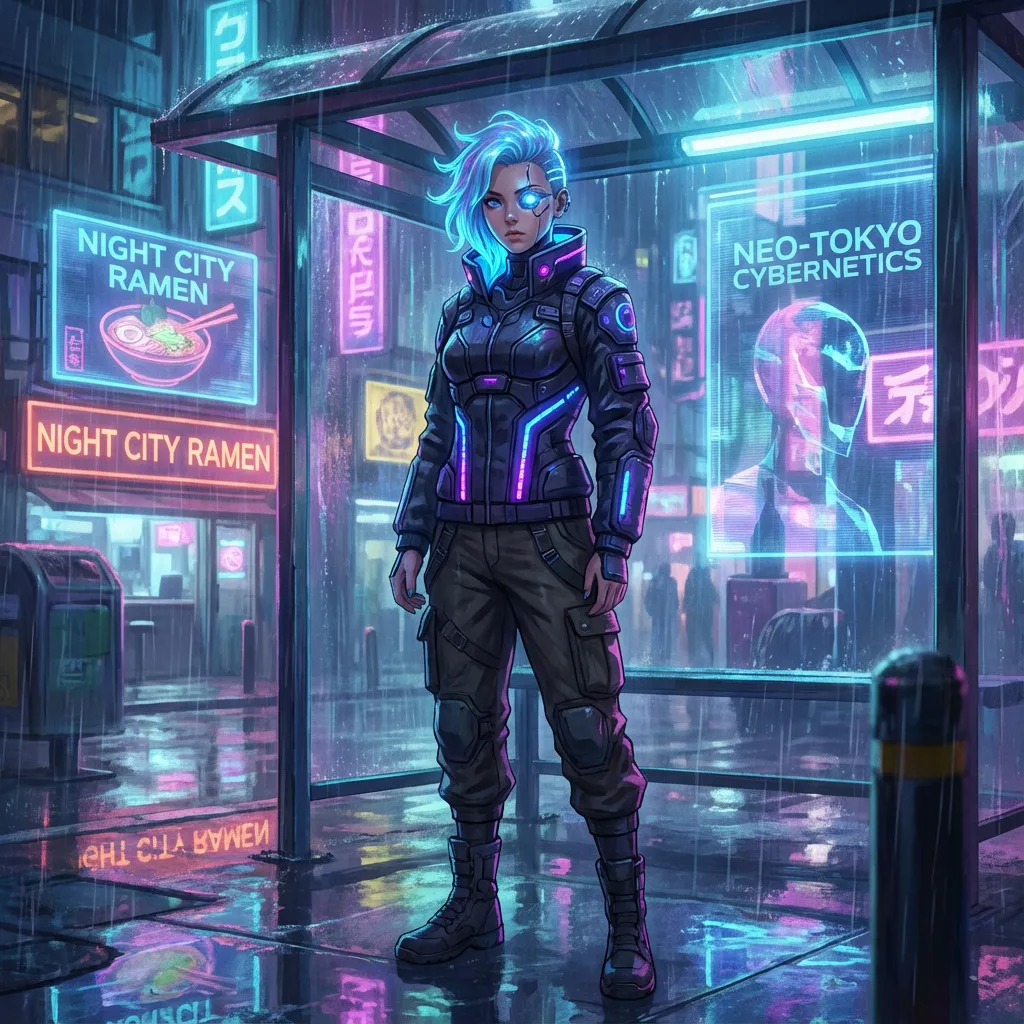
"Sci-fi anime style, female mecha pilot in chest harness suit, cockpit HUD overlay glowing on the inside of her visor, panel-line frame visible through the canopy, anamorphic lens flare across the nose camera, magnesium-white hangar light, key visual composition, clean anime linework, no text"
Try this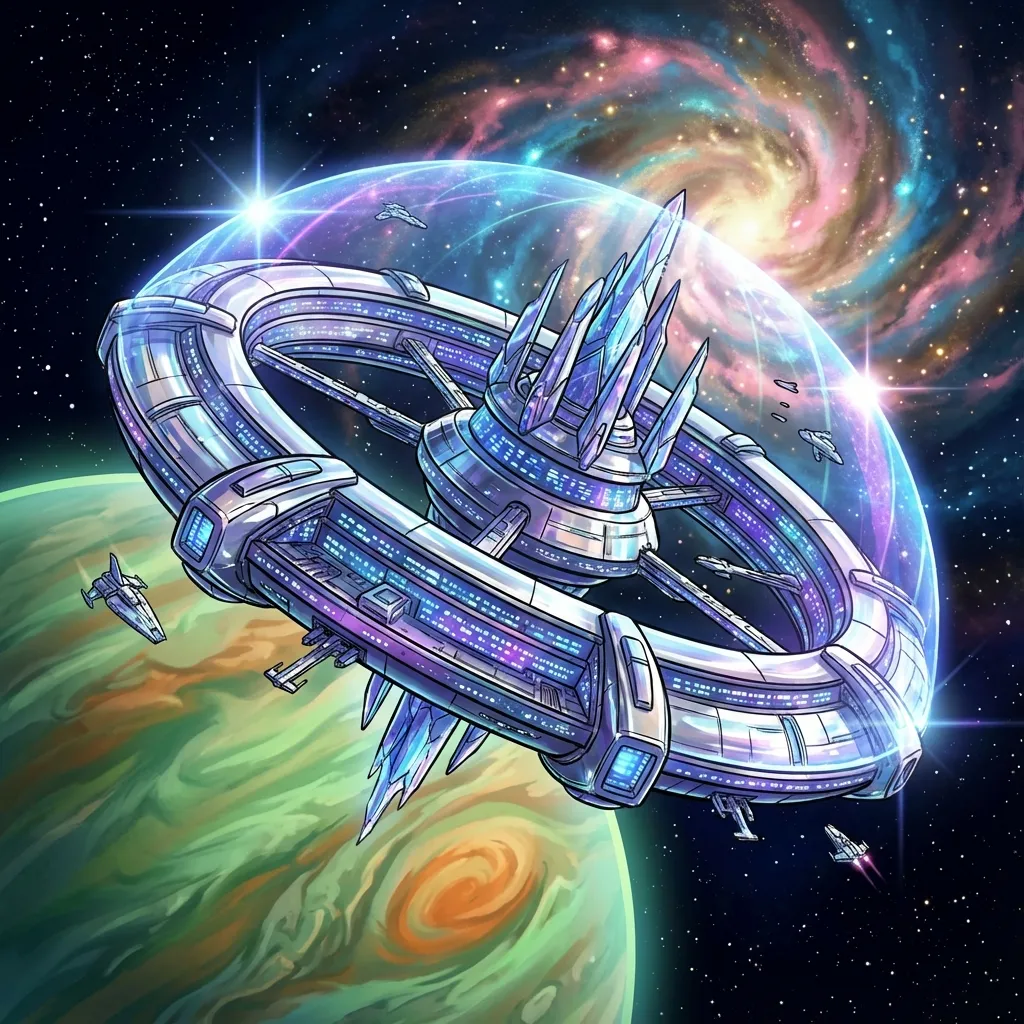
"Sci-fi anime style, rain-slick cyberpunk alley at midnight, neon ramen sign reflected in puddle, lone hooded figure with glowing visor walking away from camera, holographic ad stack rising into the fog, anamorphic blue and magenta lens flare, cinematic wide shot, clean anime linework, no text"
Try this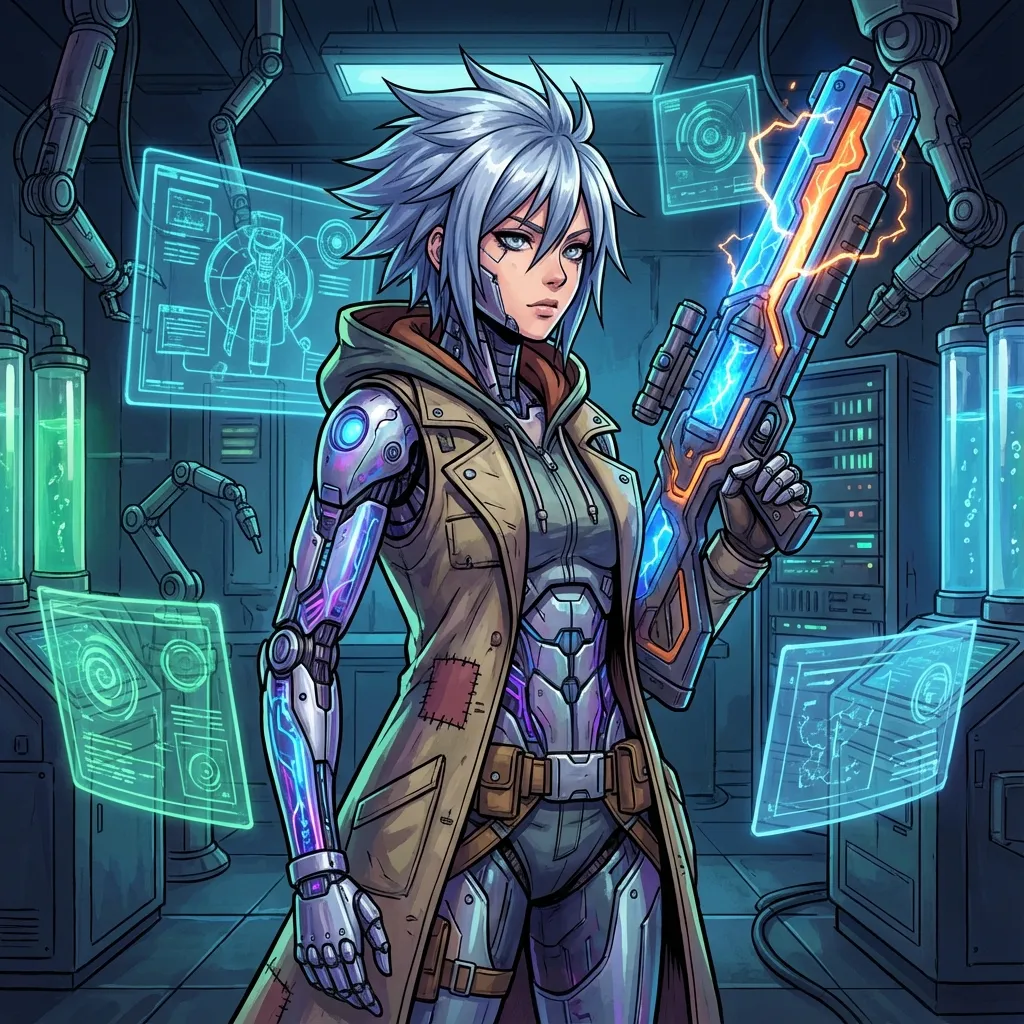
"Sci-fi anime style, massive orbital dock around a gas-giant crescent, cracked station plating with patch welds, small repair pod in the foreground for scale, magnesium-white hangar light spilling from open airlock, hard sci-fi cover composition, panel-line frame detail, no text"
Try thisMake your own Sci-fi anime style art
Type a prompt below, or tap a starter to begin.
Generate a Sci-fi anime scene
Type a scene below and press Generate.
Why choose Anifusion?
Panel-line mecha detail
Visible panel seams, vent louvres, exposed bolt heads, and weather-worn paint chips on shoulder pauldrons. Mecha read as built objects, not toy renders, with rim light catching the joint angles.
Neon city skylines
Rain-slick streets layered with holographic ad stacks, bridge interiors lit by CRT-style readouts, and noodle stalls under sodium lamps. Backgrounds carry as much story as the foreground subject.
Energy weapons and shields
Plasma rifles with visible coil glow, kinetic shields shimmering at impact points, railgun muzzle flashes that wash the cheek in white light, and rune-style targeting reticles overlaid on visor glass.
HUD overlays and cockpit UI
Targeting reticles, fuel and coolant gauges, kanji warnings, and translucent map slices layered on cockpit canopies. UI feels like real interface chrome, not vague glowing geometry.
Orbital and deep-space settings
Orbital docks with cracked airlock plating, station rings against gas-giant crescents, jump-gate accretion rings, and small ships in the foreground for true scale. Useful for hard-SF cover keys.
Cyberpunk neon gradient palette
Electric blue running into hot magenta, sodium street tones, and cool magnesium whites for orbital scenes. Lighting choices anchor mood from rain-soaked alley to sterile lab interior.
Create in 3 easy steps
Write your prompt
Describe your vision for Sci-fi anime style in plain language.
Refine settings
Tune the aspect ratio and style strength to your liking.
Generate and enjoy
Click generate and watch your masterpiece come to life in seconds.
Related styles
Discover more artistic directions you might love
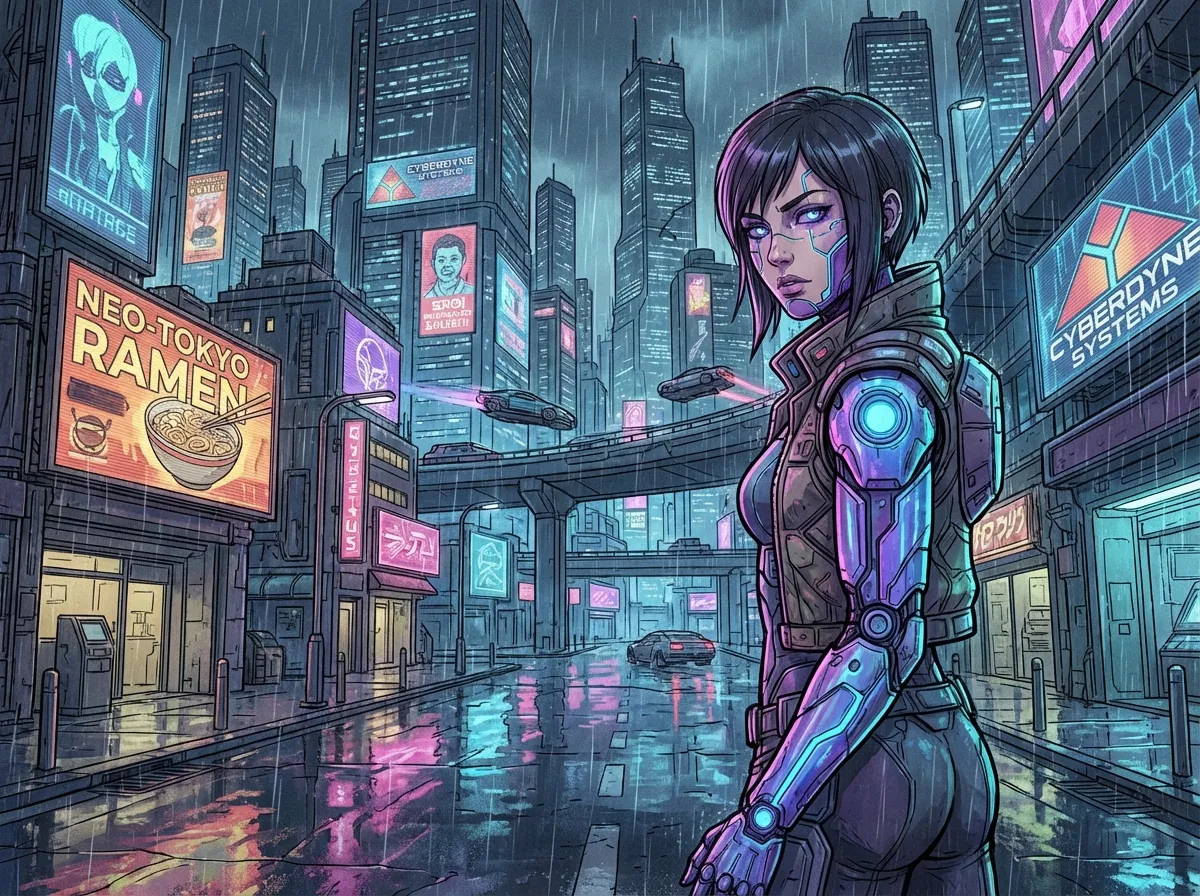
Cyberpunk anime style
Cyberpunk anime style is a Neo Tokyo dystopian look defined by neon Kowloon rooftops, Akira-style motorcycle smear lines, holographic ad billboards, and chrome-and-cable cyberware on characters. It suits original netrunners, dystopian street stills, and bike-action key art.
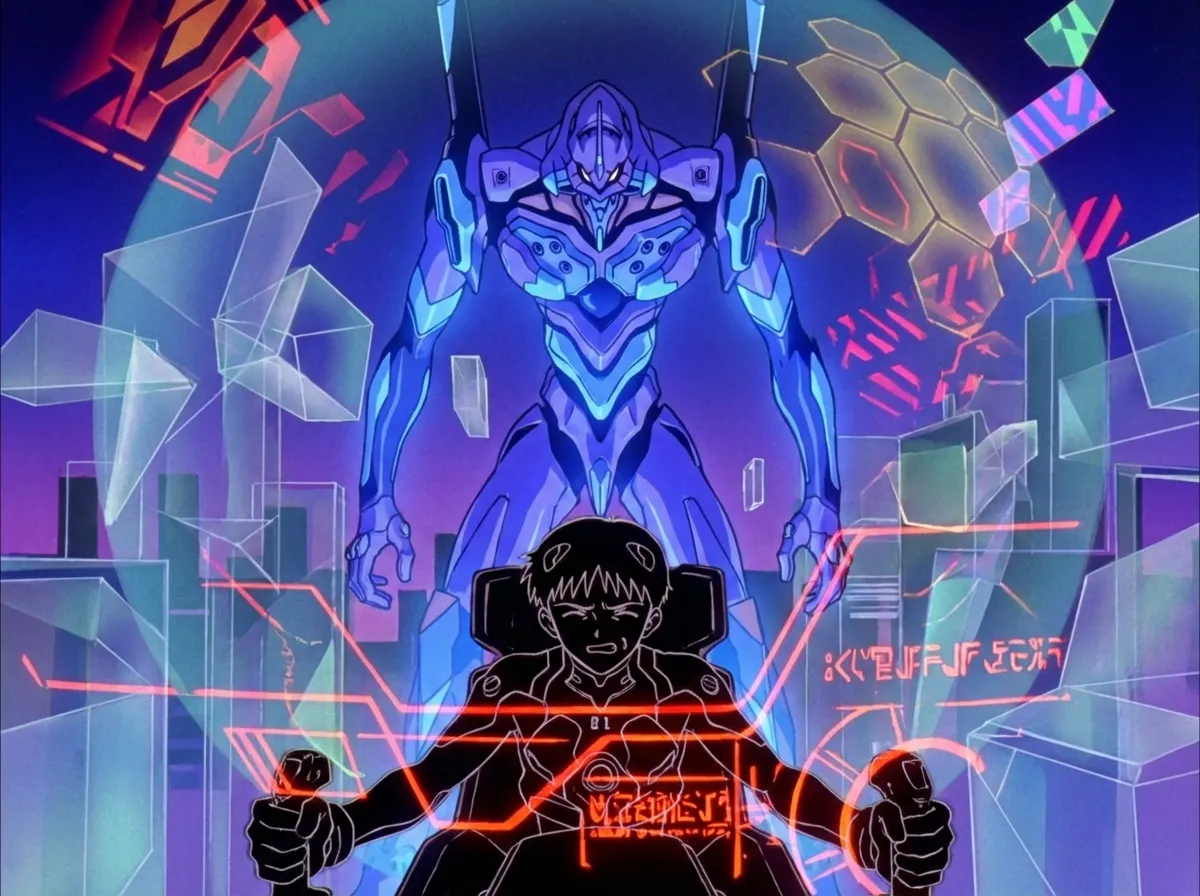
Neon Genesis Evangelion style
Evangelion style combines biomechanical EVA design, hexagonal AT-field effects, and the surreal religious imagery of Hideaki Anno's series. Use it for mecha key art, character pieces of pilots in plug suits, and the heavy, anxious mood that defines the franchise.
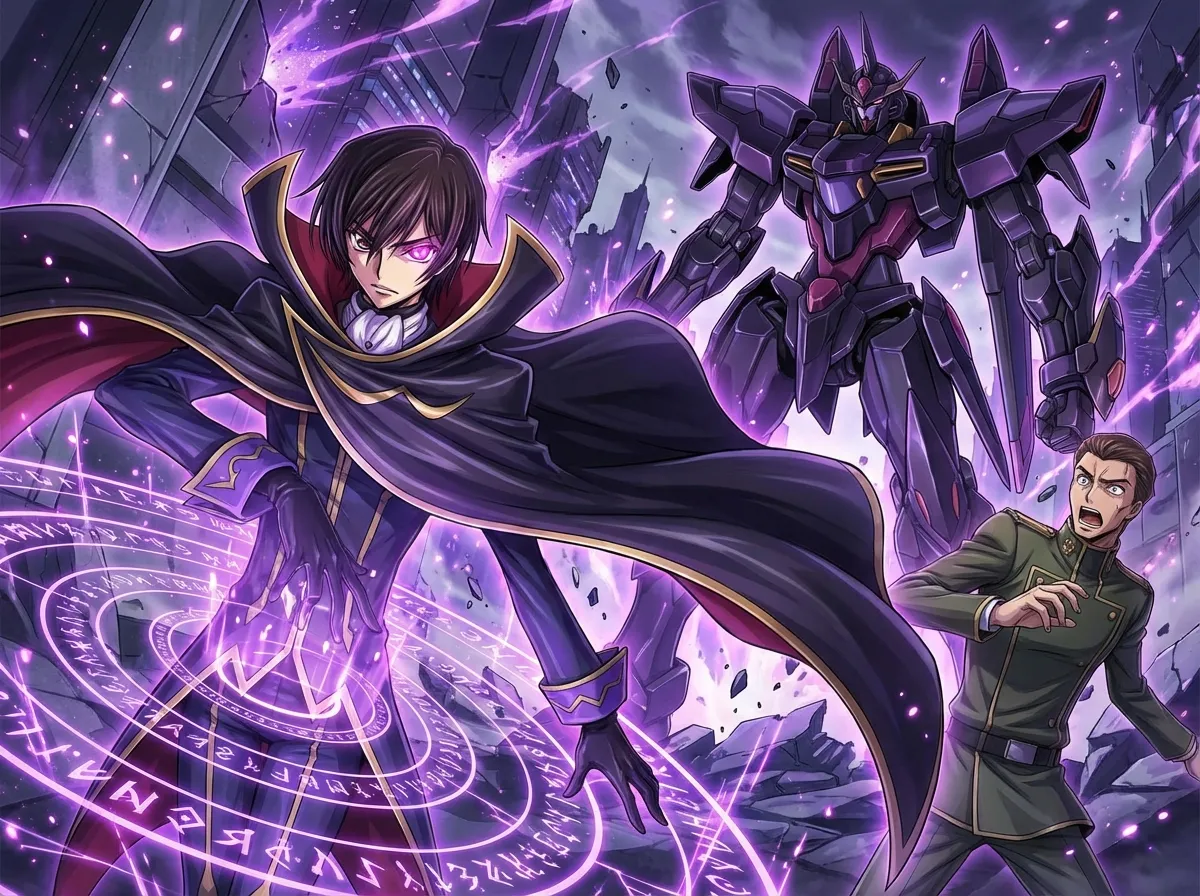
Code Geass style
The Code Geass style pairs slender CLAMP-influenced character designs with hard-edged Britannian uniforms, gothic-modern architecture, and Knightmare Frame mecha silhouettes. Geass eye effects (red sigil over violet iris) and high-contrast purple-and-gold accents anchor a dramatic, conspiratorial mood.
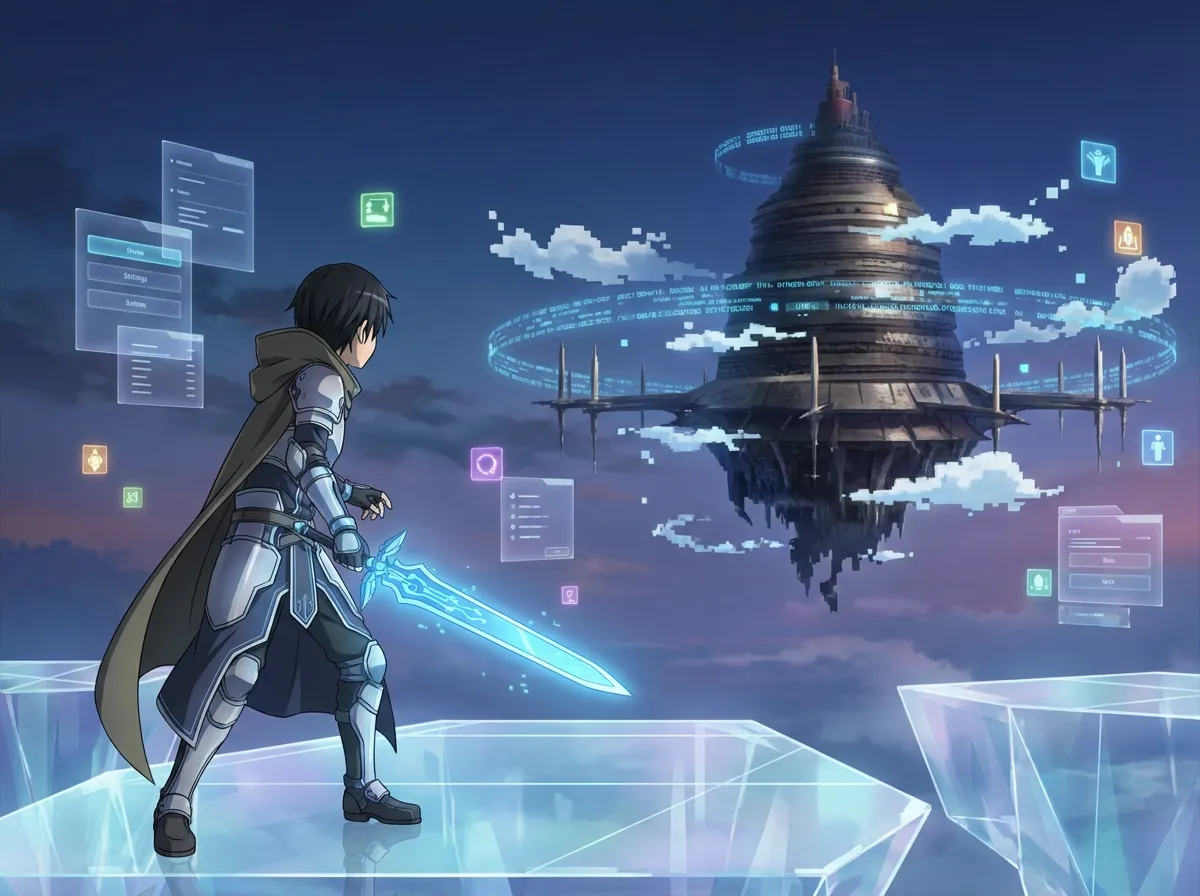
Sword Art Online style
Sword Art Online style is the VRMMO action-anime look defined by Aincrad floating castle layouts, VR HUD inventory overlays, neon avatar trails, and skill-name overlay tags. It suits original player-avatar portraits, dual-wielding fight key art, and Aincrad-floor guild scenes.
Attack on Titan style
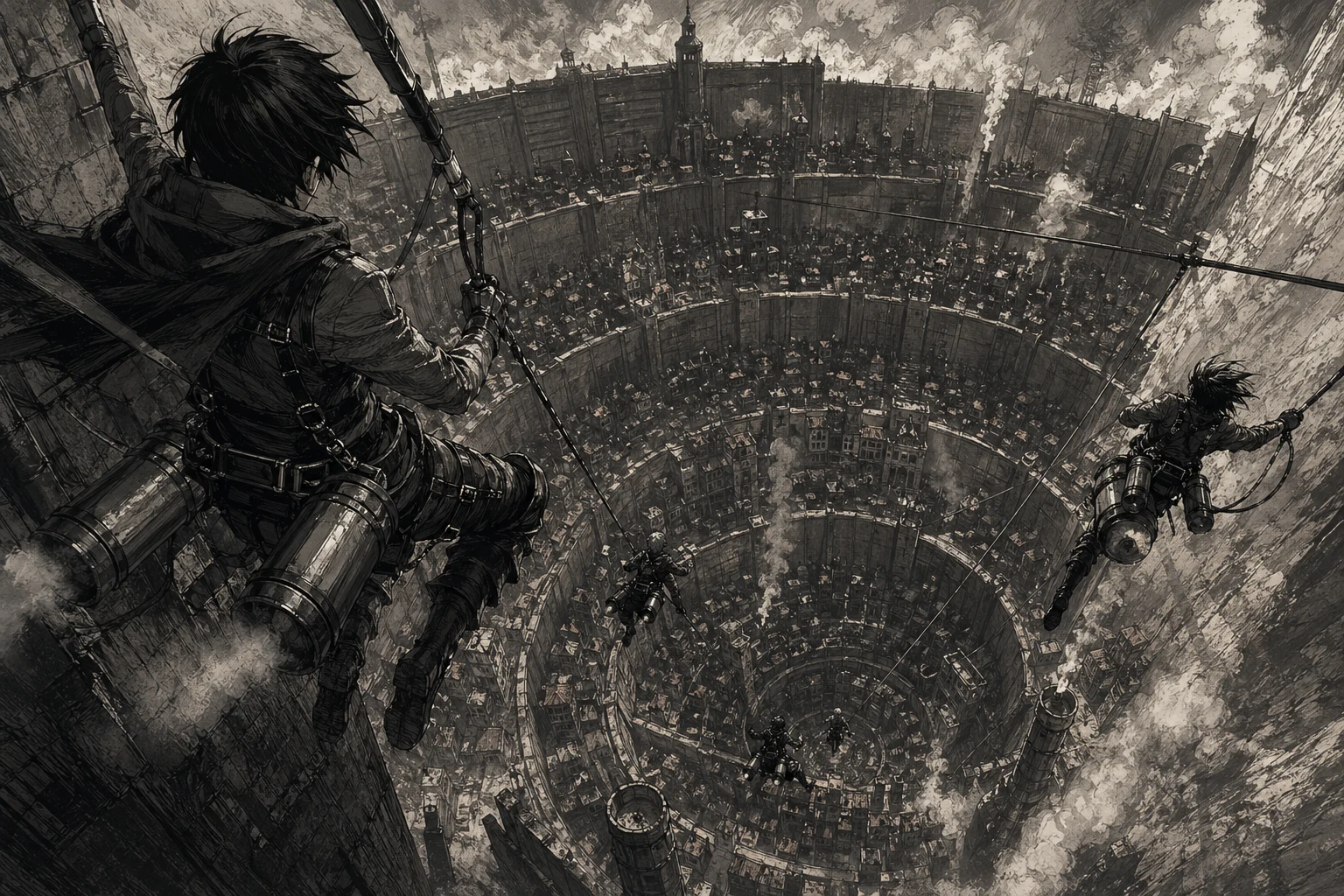
Attack on Titan style pairs Isayama jagged ink lines and dense crosshatch with ODM gear cable trails, ruined Wall Maria perspective, and pure scale dread. It suits Survey Corps OCs, vertical-action chase panels, and walled-city establishing shots.
Fullmetal Alchemist style
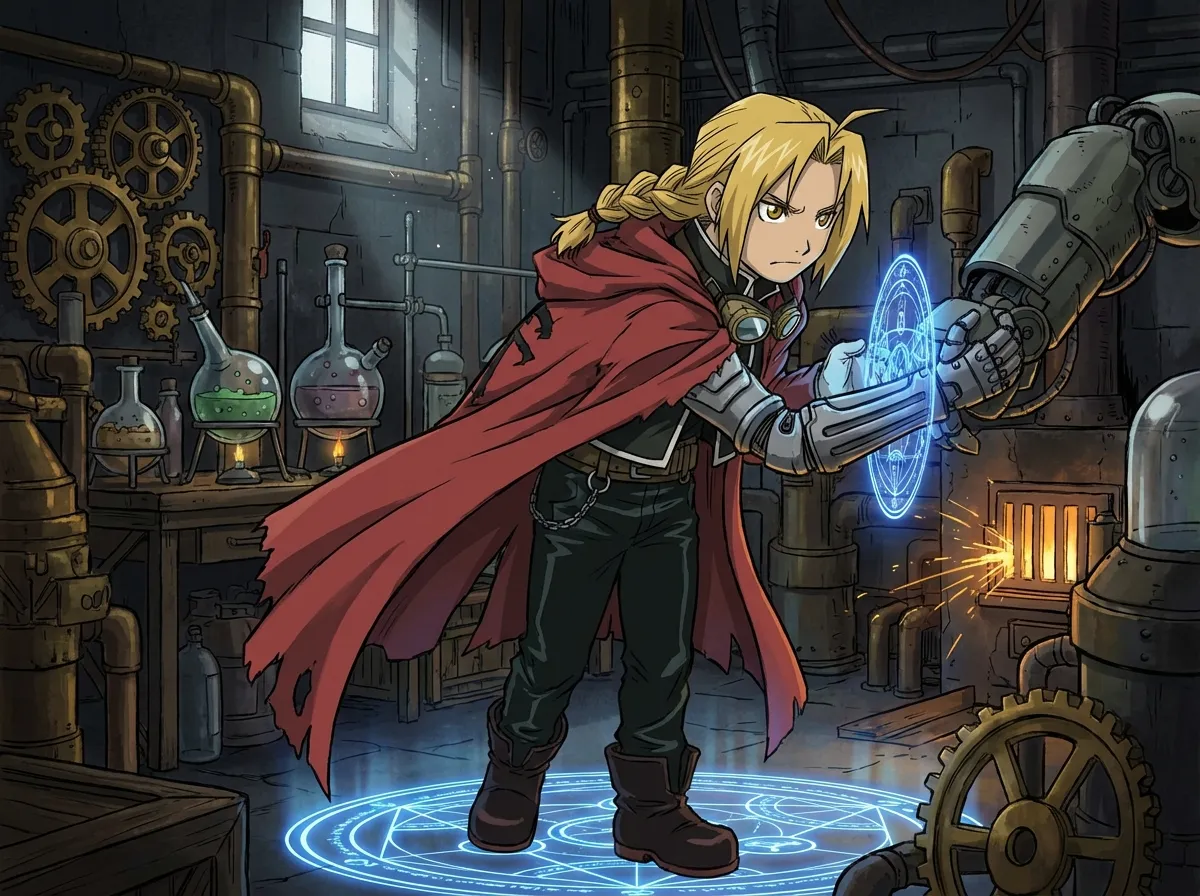
The Fullmetal Alchemist style blends military uniform design with industrial steampunk environments and the geometric language of alchemy. Expect sharp outlines, brass and gunmetal palettes, and characters whose silhouettes carry the weight of automail and Amestrian-coat detailing.
Frequently asked questions
Prompt tips, rights, and workflow. Sign up free to generate in this look today.
Generate a Sci-fi anime scene
Type a scene below and press Generate.
Which sci-fi anime should I reference for prompts?
Naming a specific show shapes the result more than abstract terms. Ghost in the Shell pushes you toward grounded cyberpunk and clinical greens; Evangelion gives you organic mecha and fluorescent oranges; Cyberpunk: Edgerunners delivers neon-magenta street art with hand-drawn ink weight; Steins;Gate stays in muted tube-monitor browns and CRT amber. Pairing one show name with two scene cues usually beats a long list of adjectives.
How do I keep mecha from looking like a smooth toy render?
Lean into engineering language. Instead of writing futuristic robot, try panel-line shoulder pauldron with rivet pattern, vent louvres along the chestplate, weather-chipped paint at the knee joint, exposed actuator cabling at the elbow. Add lighting cues like rim light along the joint angles and magnesium-white hangar lamp so the model has a clear surface to render. The more hardware nouns, the less the result reads as plastic.
Will this style work for an indie cyberpunk webcomic?
Yes, this is a core use case. Lock the protagonist wardrobe (visor color, harness pattern, sleeve length) and recurring environment cues (sodium-lit alley, neon ramen sign, holographic ad stack), then re-prompt the same descriptors per panel. For pages, add manga panel composition, halftone shading, clean ink line so each result reads as part of the same chapter rather than a series of one-off keys.
Can I use it for a hard-SF book cover instead of cyberpunk?
Yes. Swap the neon palette for cool slate, magnesium white, and engine orange, and shift environments toward orbital docks, jump gates, station interiors, and ringed gas giants. Compose with one large structure and a small ship in the foreground for scale, then add hard sci-fi cover composition, panel-line frame detail to push the result toward print-cover proportions instead of wallpaper-style splash art.
What separates this from generic futuristic AI art?
Hardware bias. Generic futurism trends toward smooth glow, ambient lighting, and shape-only mecha; this style commits to surfaces with wear, lighting that reads as a named source (sodium lamp, neon sign, muzzle flash), and UI that looks like real interface chrome instead of decorative geometry. Replacing soft adjectives with engineering nouns is the single biggest shift you can make.
How do I write believable HUD and cockpit UI in prompts?
Treat the HUD as a layered overlay, not a glow effect. Specify what the reticles target (incoming missile lock, distance readout, fuel-burn percent), where the kanji warnings sit (top-right corner, blinking red), and what the canopy refraction does to the light (faint chromatic edge, faint smear from rain). The more concrete the UI, the more the cockpit reads as a working interface.
Start creating Sci-fi anime style art today
Join 130,000+ creators and bring your imagination to life with 100 free credits.