Draw Spider-Man style city superhero comic art with AI
Web-swings between brick canyons, water-tower rooftop crouches, split red-and-blue suits, and rainy night panels in classic American comic ink.
Franchise, studio, and character references describe style or mood only, not a license, sponsorship, endorsement, or affiliation. You are responsible for your prompts and outputs. As-is, no warranty of non-infringement (not legal advice). For DMCA, copyright, or trademark issues, use our Contact page.
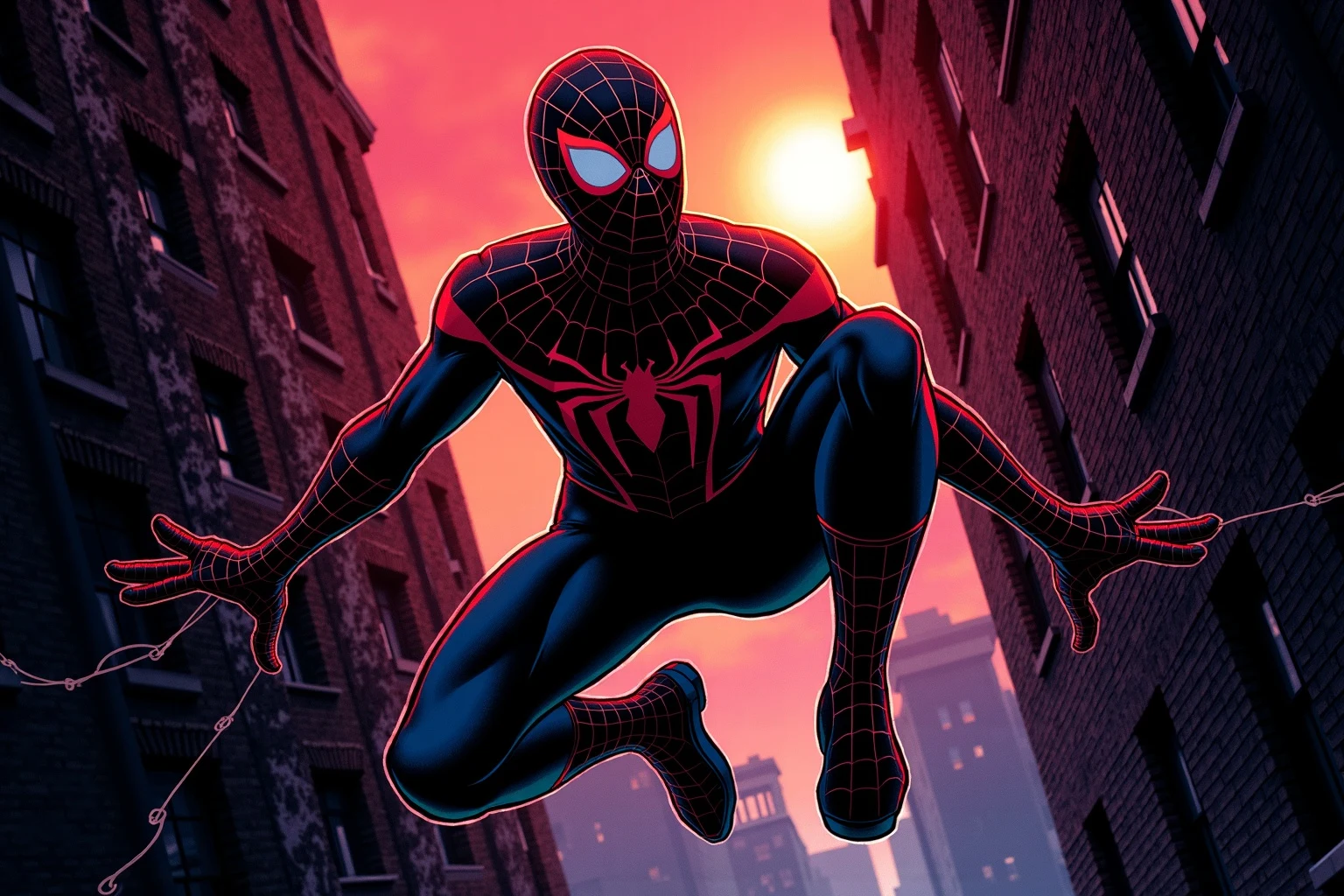
Generate a Spider-Man scene
Type a scene below and press Generate.
About Spider-Man style
Spider-Man style art is the classic Marvel city-hero look: a wall-crawling original hero swinging between rooftops, narrow brick alley canyons with fire escapes and water towers, split red-and-blue suit panels, and acrobatic twisted poses. Great for street-level urban superhero stories and dramatic night scenes.
Spider-Man redefined the urban superhero look in comics. The visual language centers on a rubbery, agile hero swinging through a dense modern city built from brick alleys, fire escapes, water towers on tar-paper roofs, peeling billboards, and a skyscraper skyline framing every shot. Suits split red and blue at clear seams, web lines double as composition guides leading the eye through the panel, and poses sit closer to gymnastics than to standing heroes, often hanging upside-down or twisting mid-leap.
When prompting for this style, set the city scene first (alley canyon between brick walls, rooftop with a water tower, crowded sidewalk seen from above) and then describe the hero in twisting motion (mid-swing between buildings, upside-down crouch on a fire escape, leaping kick across a fire escape). Use phrases like "American comic ink", "split red and blue suit", "web lines as motion guides", and "dutch-angle alley". Keep the hero original with abstract chest detail rather than the trademarked spider symbol so the look stays clear of any Marvel IP issue.
What sets this style apart from other superhero pages is the perspective. Almost every shot is either looking sharply up the side of a building or sharply down at the street, never eye-level, which gives the work that distinct wall-crawler vertigo even before the hero enters the frame.
Try Spider-Man style generation
Try the look on your own prompt. Start from one of the examples below.
Example prompts
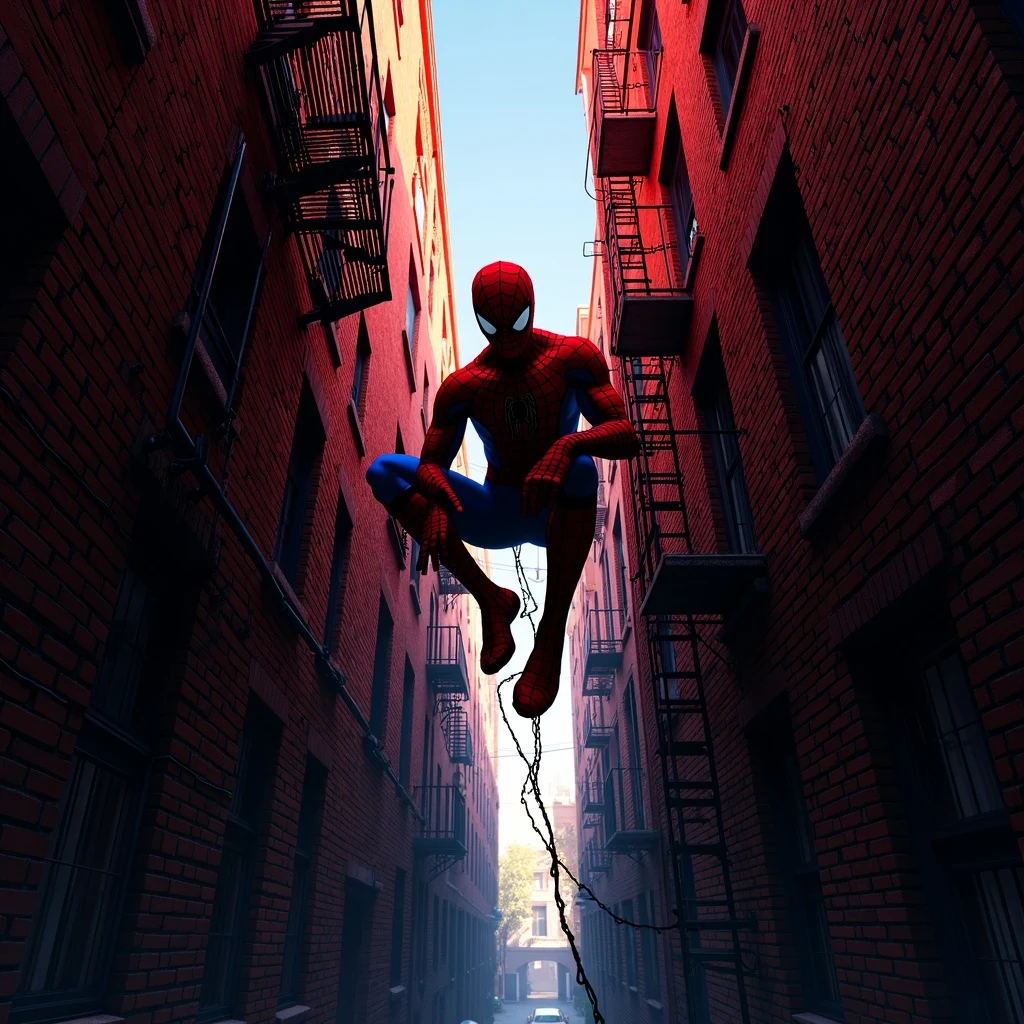
"Spider-Man style, urban superhero comic art in Spider-Man style, original wall-crawler hero in mid-swing between two brick buildings, narrow alley with fire escapes and ladders below, web line arcing through the panel from upper left to lower right as composition guide, split red and blue suit with fine web-pattern overlay and abstract geometric chest detail, dutch-angle camera, thick American comic ink with halftone shading, no text, no logos"
Try this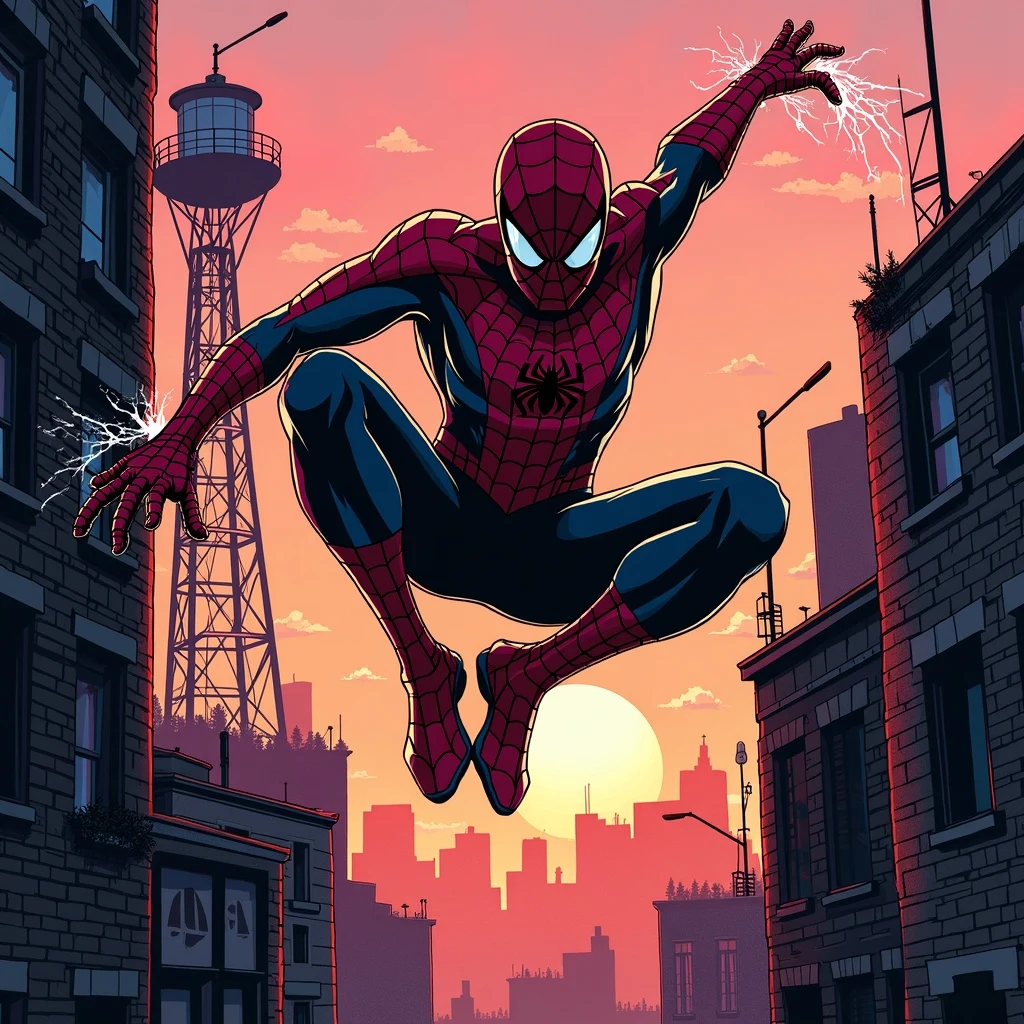
"Spider-Man style, rooftop scene at sunset in Spider-Man style, original hero in an acrobatic crouch on top of a wooden water tower, magenta and orange sky behind, antenna forest of city rooftops stretching to the horizon, web line trailing behind the leap as a long ink curve, thick contour ink, bright color blocking, no text, no logos"
Try this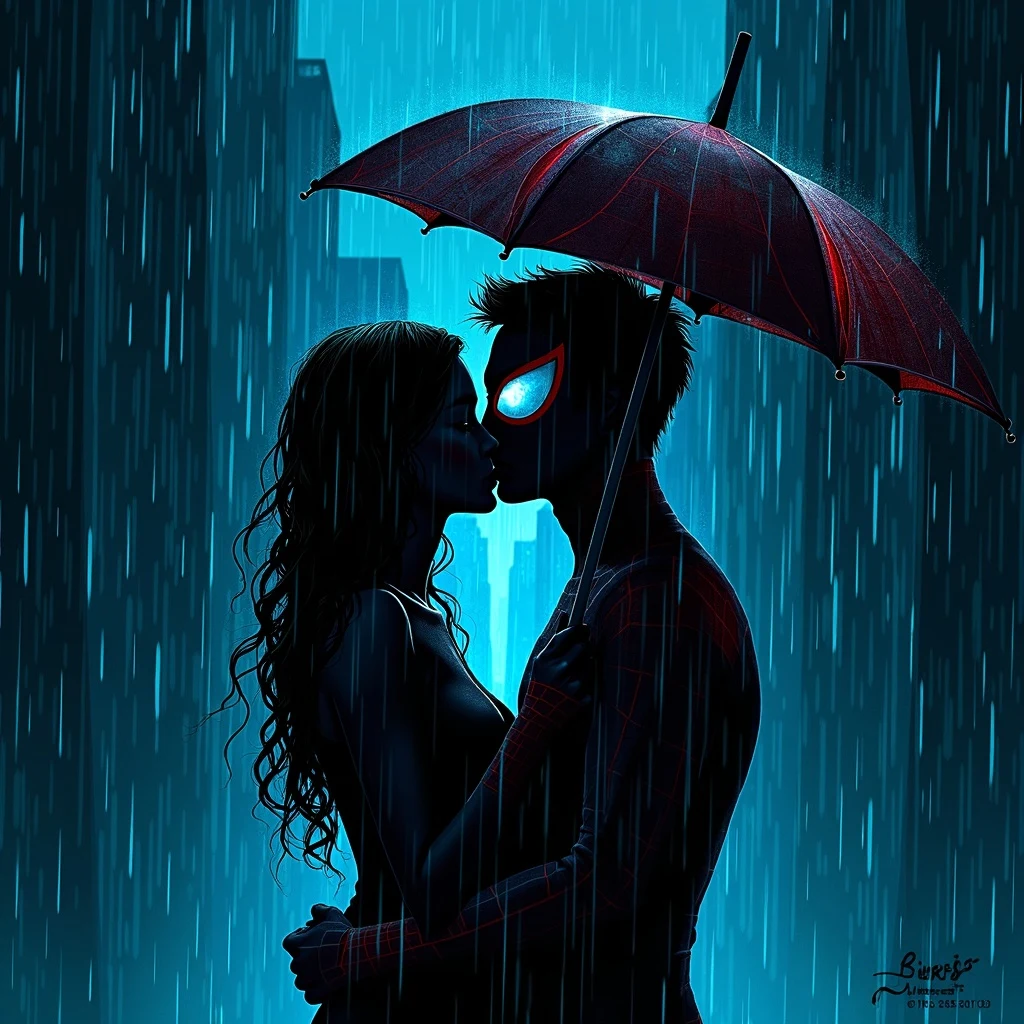
"Spider-Man style, rainy night street in Spider-Man style, original hero hanging upside-down from a single web line above the sidewalk, neon sign reflected in wet asphalt below, cobalt rain wash slanting across the panel, scattered umbrella silhouettes of pedestrians, halftone shading, American comic ink, no text, no logos"
Try thisMake your own Spider-Man style art
Type a prompt below, or tap a starter to begin.
Generate a Spider-Man scene
Type a scene below and press Generate.
Why choose Anifusion?
Web lines as composition guides
Long ink web strands arcing across the panel from corner to corner, leading the eye to the hero and giving the city geometry a clear direction.
Brick alley canyons
Tight vertical streets between aged brick buildings with fire escapes, ladders, fading graffiti, and just a sliver of sky at the very top of the frame.
Split red-and-blue suit
A clean split-complementary palette: deep blue and bright red panels with a fine web-pattern overlay, lit by warm brick bounce on the red sections.
Acrobatic twisted poses
Bent backwards in mid-leap, upside-down crouches on a fire escape, and limbs extended at extreme foreshortened angles for visual energy.
Rainy night street panels
Cobalt rain wash on wet asphalt, neon signs reflected in puddles, and a hero silhouette hanging from a web line above the street.
Urban emergency rim light
Police strobes bouncing as alternating red and blue color slashes across damp brick walls, adding tension to night chase scenes.
Create in 3 easy steps
Write your prompt
Describe your vision for Spider-Man style in plain language.
Refine settings
Tune the aspect ratio and style strength to your liking.
Generate and enjoy
Click generate and watch your masterpiece come to life in seconds.
Related styles
Discover more artistic directions you might love
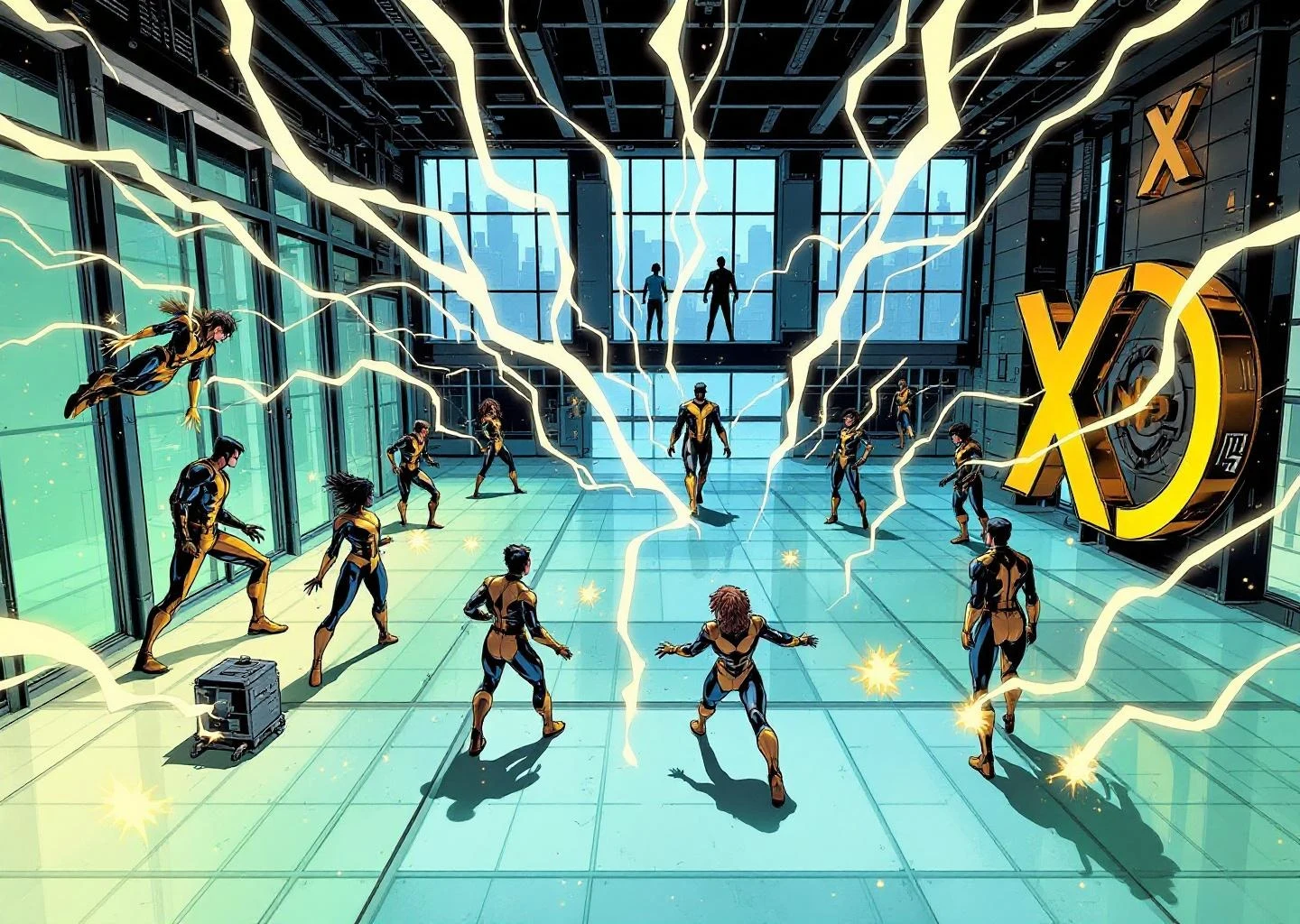
X-Men style
X-Men style art captures the Marvel mutant-team look: original heroes posed together in glass-walled training rooms, energy effects spilling around them, navy-and-gold uniforms with abstract chest emblems, and thick American comic ink. Great for academy rosters, team-up splash pages, and rooftop missions.
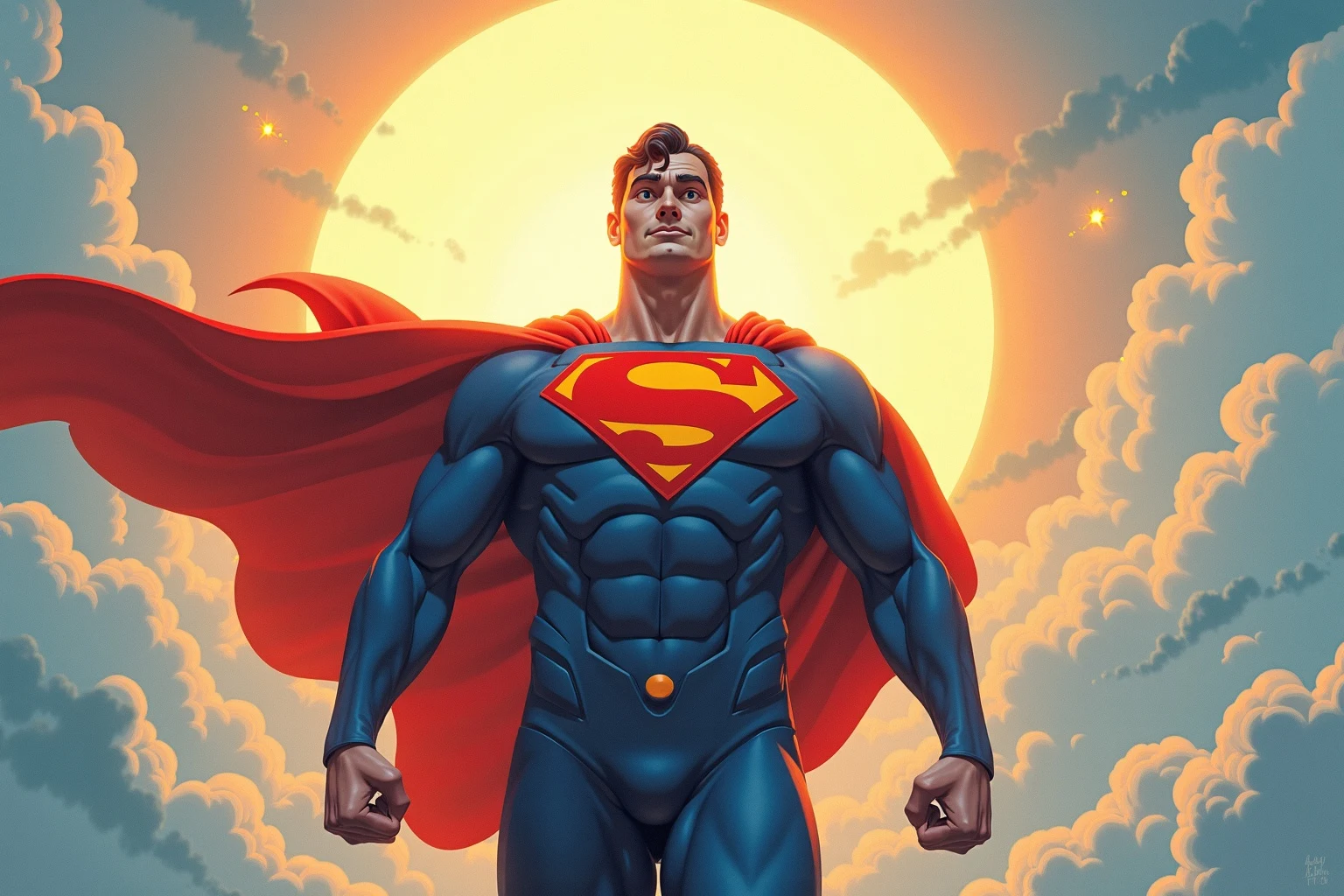
Superman style
Superman style art is the classic flying-hero look: an original guardian soaring above layered clouds, a sun-lit cape shaped like sculpture, primary-color suit panels, and an art-deco Metropolis skyline below. Great for hero portraits, mid-air rescue scenes, and newsroom dual-identity panels.
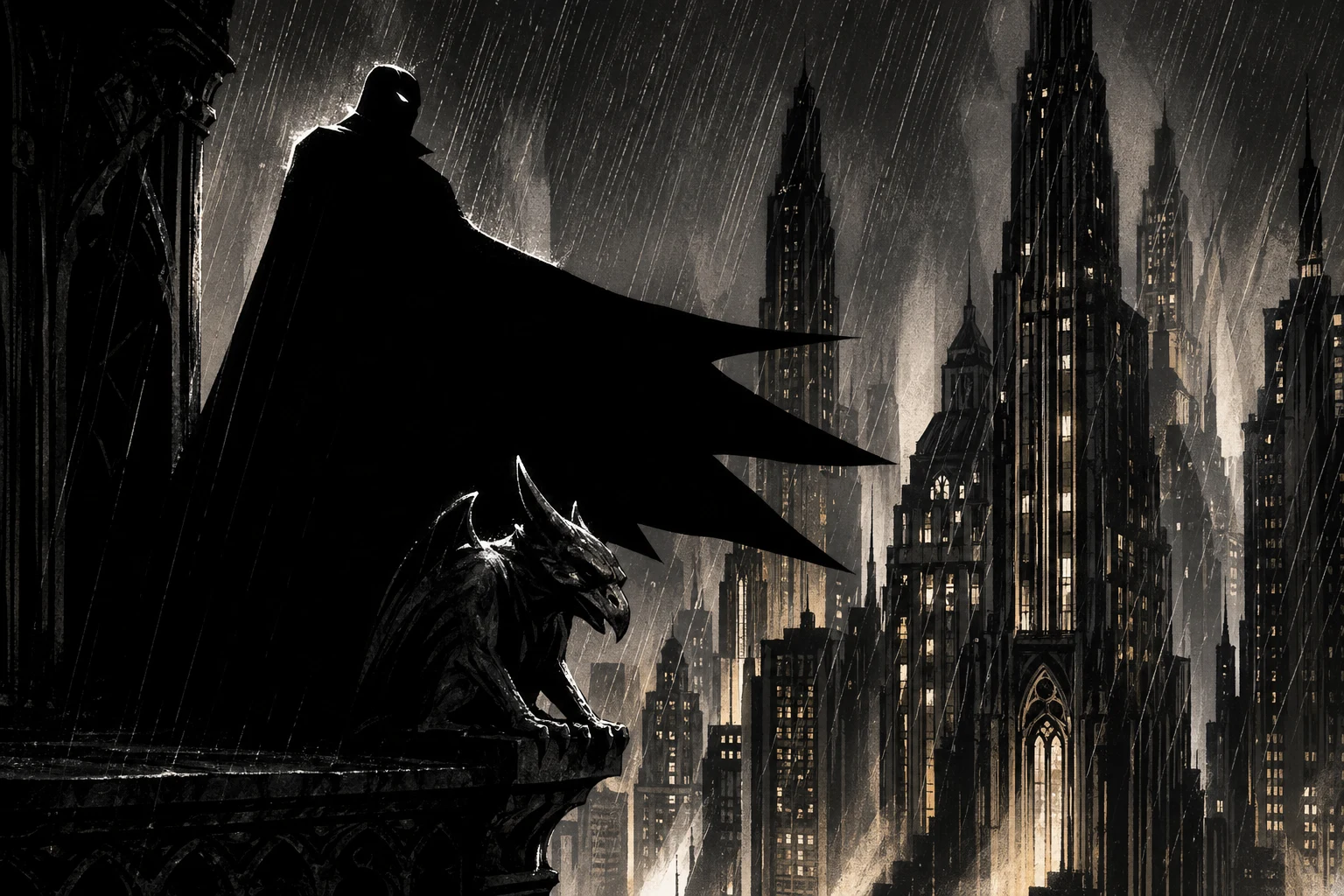
Batman style
American ink-forward comics: drybrush rain, chiseled jaw shadows, and vertical Gotham canyons with spot color accents.
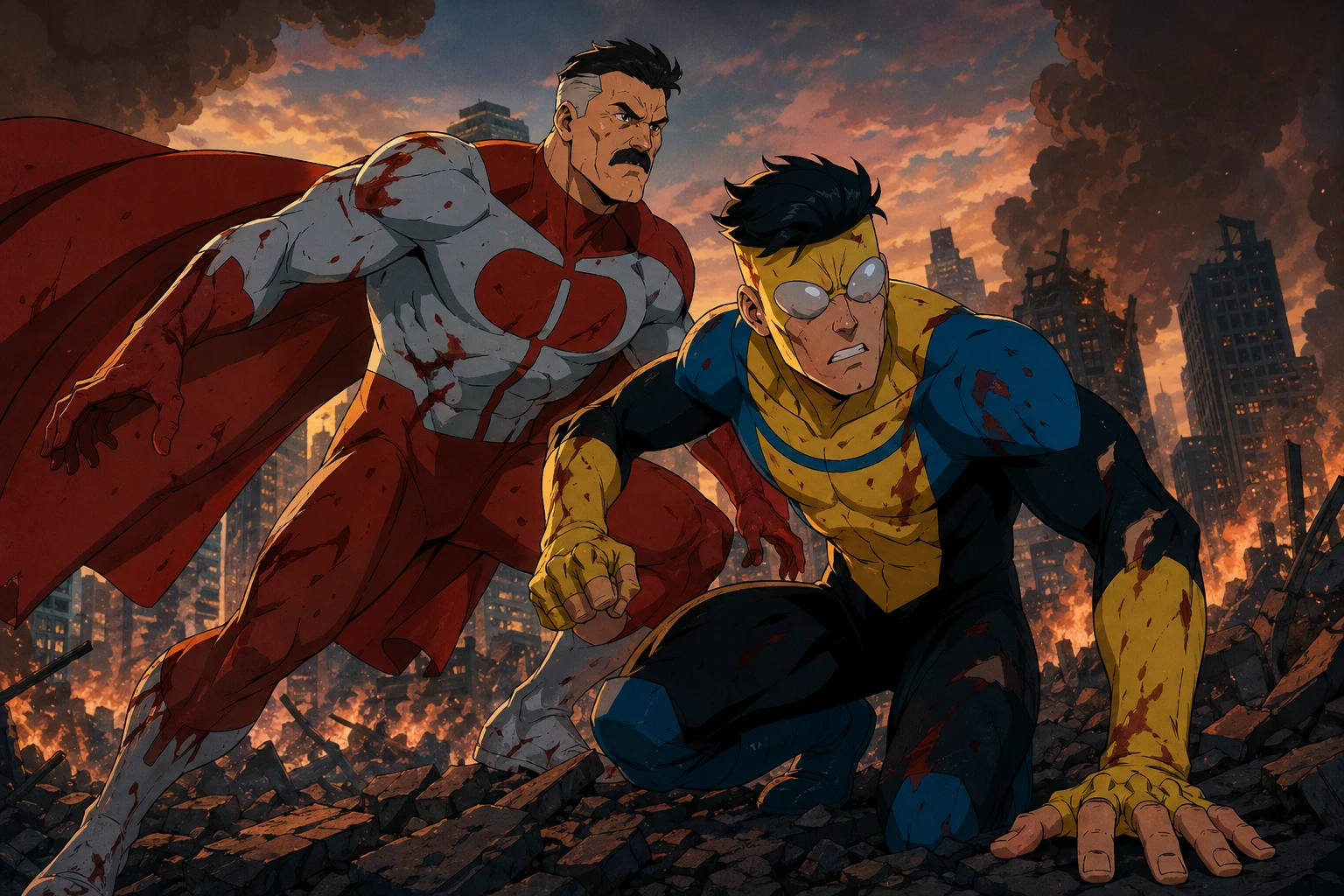
Invincible style
Modern western cape stories with clear readable silhouettes, big emotional swings, and impact frames that do not flinch from consequences.
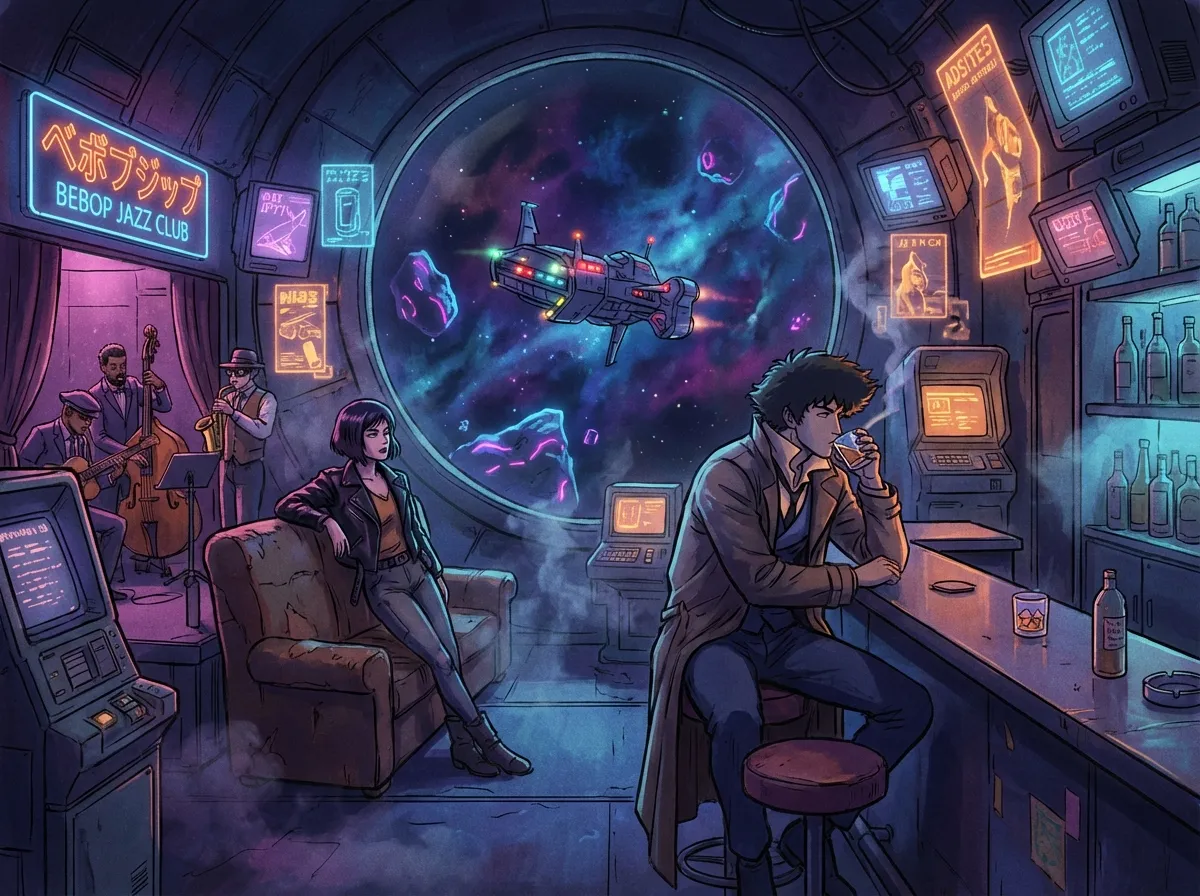
Cowboy Bebop style
Cowboy Bebop style is a sophisticated mix of film-noir lighting, retro-futuristic spacecraft, and jazz-bar atmosphere. Use it for space-western bounty hunters, lived-in star ports, and the cool, understated mood that defined Watanabe's series.
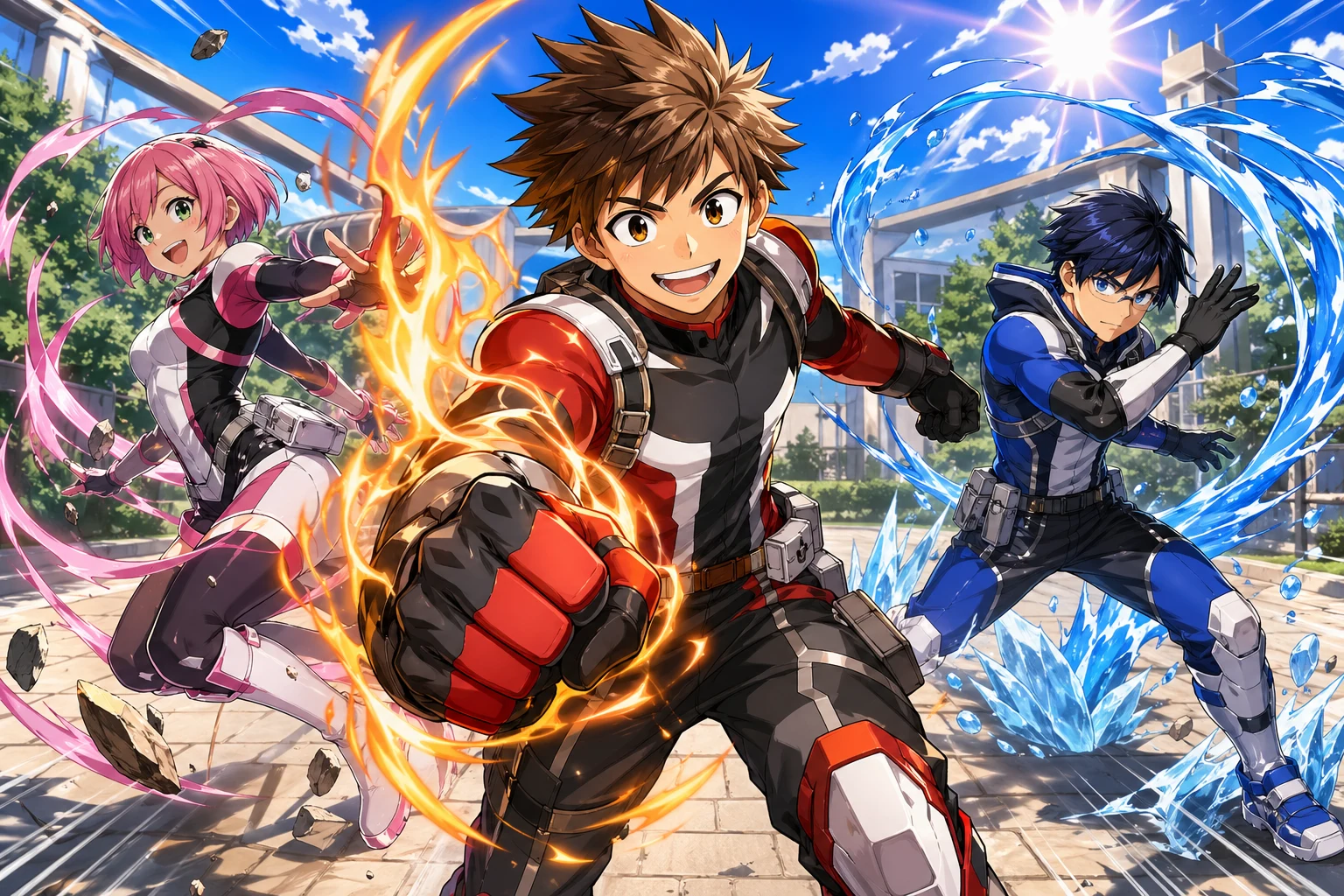
My Hero Academia style
My Hero Academia style pairs Kohei Horikoshi's grit ink and Western-comic-influenced posing with quirk effect overlays, school uniform tactical detail, and city-brawl key visuals. It suits original pro hero OCs, U.A.-style student art, and quirk reveal panels.
Frequently asked questions
Prompt tips, rights, and workflow. Sign up free to generate in this look today.
Generate a Spider-Man scene
Type a scene below and press Generate.
How do I make alley scenes feel cinematic without clutter?
Anchor the composition with one strong vertical line: a steam pipe, a fire escape ladder, or a single web strand reaching toward a sliver of sky at the top of the frame. Let the brick walls fall into shadow on either side so the eye stays on the hero and that vertical line. Two or three small lit windows are usually enough to hint at the rest of the city.
How do I avoid copying the official spider symbol?
Use abstract chest patterns instead of a literal spider: a hex mesh, a network of cracks radiating from the sternum, a stylized starburst, or simple fabric panels that hint at a logo without forming the trademarked silhouette. The split red and blue suit color itself is generic to the urban hero archetype.
How should I draw a swing arc?
Show three moments in one image: the hero pushing off a wall in the lower corner, the apex of the swing high in the frame, and the trailing web line connecting back to a building at the edge. The web is what sells the motion, more than the body pose alone, so let it cut diagonally across the entire panel.
What works for rainy night scenes?
Wet asphalt that mirrors the city back upside-down, neon signs reflected in puddles, a slanted cobalt rain wash, and a hero silhouette either hanging from a web above the street or perched on a fire escape rail. Light bounces off everything wet, which adds drama for free without extra detail.
Why does this style not match anime cel shading?
The look depends on American comic ink: thick contour lines, halftone dots for shading, and bold split color. Anime cel shading uses softer gradients and cleaner highlights that flatten out the comic energy and the rim-light bounce off brick. Pick one or the other for a coherent result rather than mixing both in the same prompt.
What other styles work well alongside Spider-Man?
X-Men and Superman share the same American comic ink lineage and pair cleanly as crossover pages. For darker urban tones, Batman style is a strong companion. Cowboy Bebop also gives you a similar street-level night-city feel from a different lineage if you want to mix in a more cinematic anime register.
Can I show the hero unmasked?
Yes, especially for emotional or dual-identity scenes. Keep the same red and blue suit but show the hero pulling the mask up off the lower half of the face, with the city framed behind. Keep the face design original so the result stays clear of any IP issue.
How do I make a black-and-white version of this style?
Drop the color words and emphasize ink technique: "thick contour", "halftone dot shading", "white silhouette flash on web lines", and "deep black areas for dramatic mood". The composition still reads clearly because the city geometry and the diagonal web lines do most of the work without needing color.
Start creating Spider-Man style art today
Join 130,000+ creators and bring your imagination to life with 100 free credits.